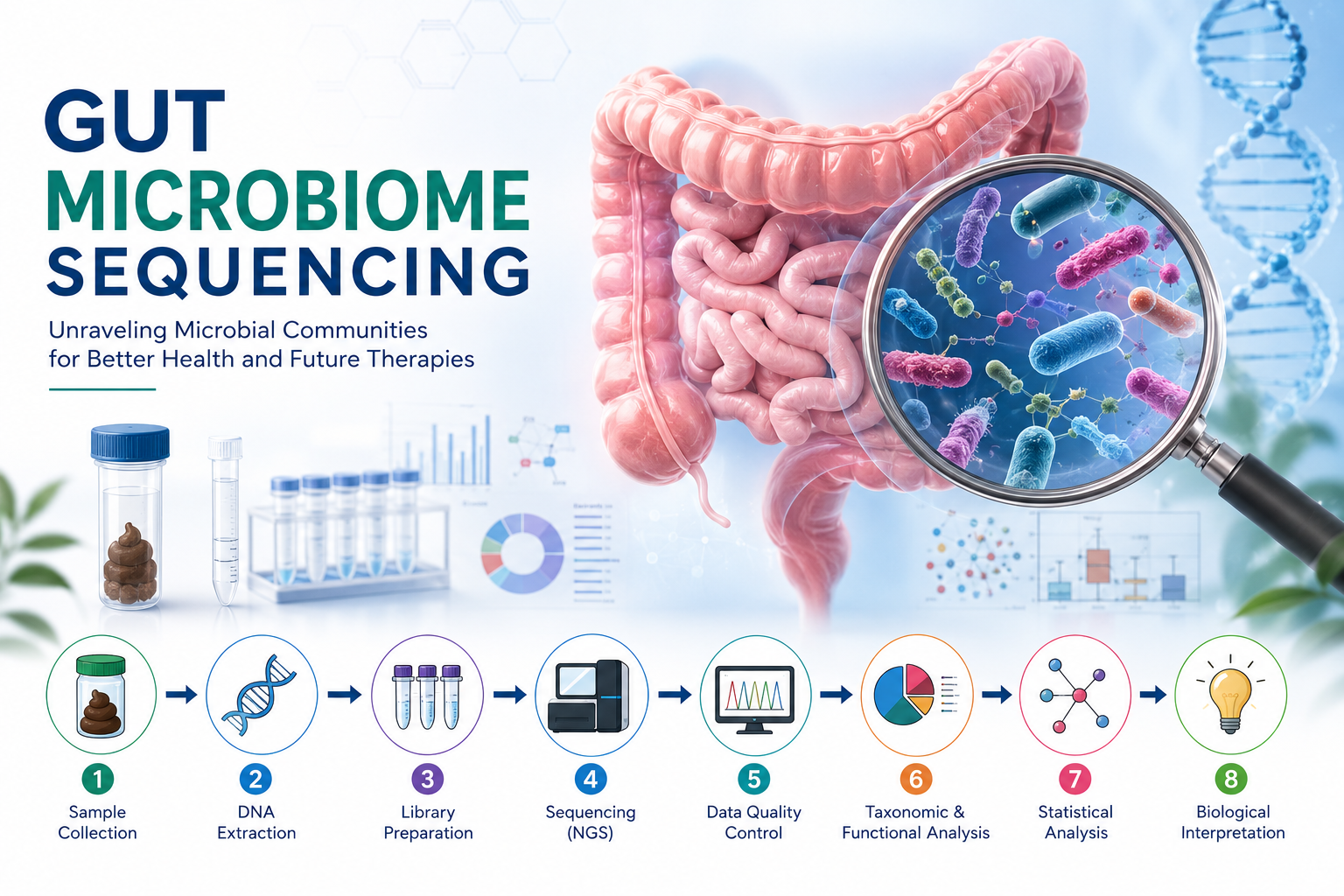

Understanding the Gut Microbiome
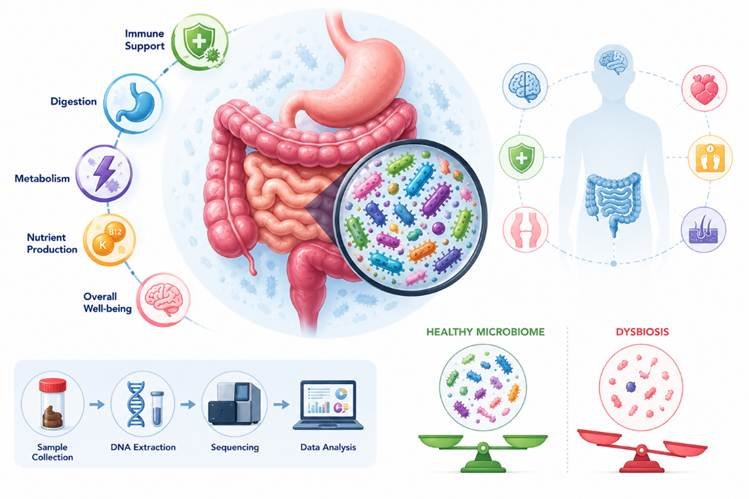
The human gut is home to trillions of microorganisms that collectively form the gut microbiome. These microbial communities play important roles in digestion, metabolism, immune regulation, nutrient production, and overall health.Changes in the composition and functional activity of the gut microbiome often referred to as gut dysbiosis have been associated with a wide range of conditions, including gastrointestinal disorders, metabolic diseases, inflammatory conditions, and altered therapeutic responses.Advanced gut microbiome analysis and sequencing enables researchers to move beyond simply identifying microorganisms and investigate microbial diversity, community structure, functional potential, and interactions with the host.
What Is Gut Microbiome Sequencing?
Gut microbiome sequencing involves extracting microbial DNA from intestinal or fecal samples and using high-throughput sequencing technologies to characterize the microorganisms present. Two commonly used approaches are:
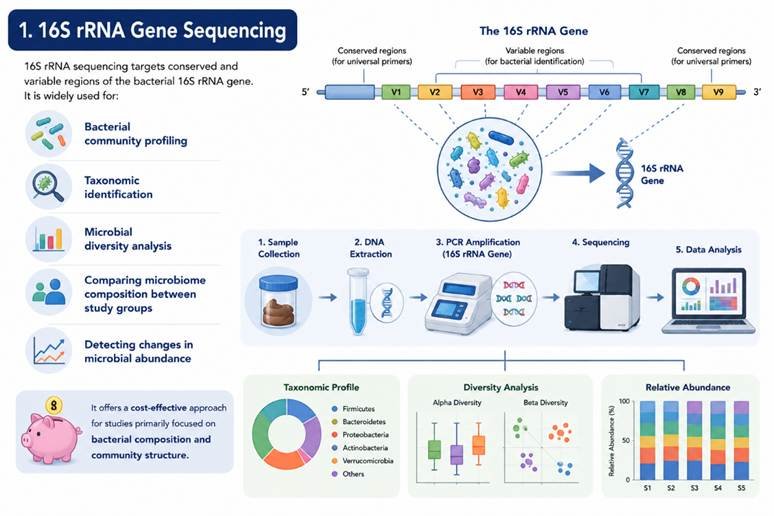
1. 16S rRNA Gene Sequencing
16S rRNA sequencing targets conserved and variable regions of the bacterial 16S rRNA gene. It is widely used for:
- Bacterial community profiling
- Taxonomic identification
- Microbial diversity analysis
- Comparing microbiome composition between study groups
- Detecting changes in microbial abundance
It offers a cost-effective approach for studies primarily focused on bacterial composition and community structure.
2. Shotgun Metagenomic Sequencing
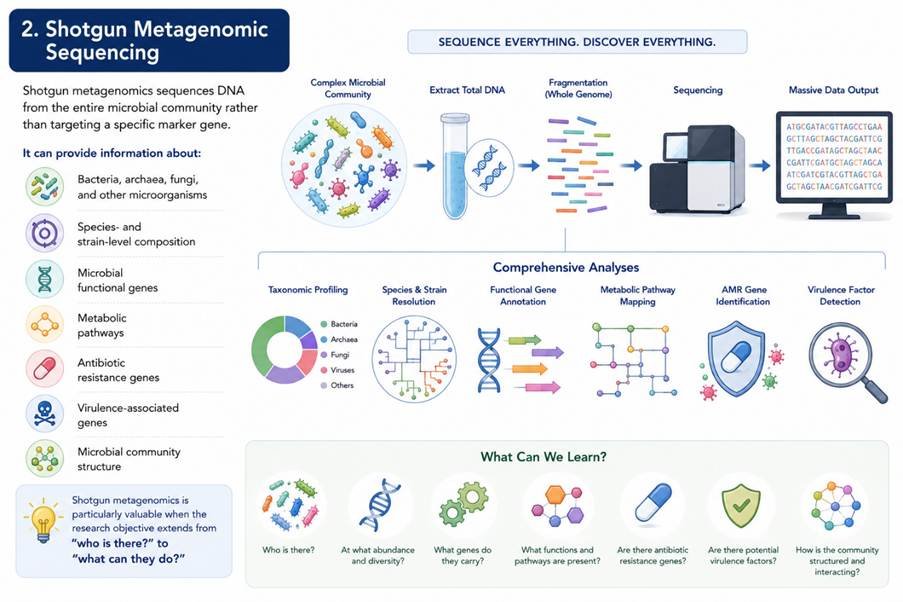
Shotgun metagenomics sequences DNA from the entire microbial community rather than targeting a specific marker gene.
It can provide information about:
- Bacteria, archaea, fungi, and other microorganisms
- Species- and strain-level composition
- Microbial functional genes
- Metabolic pathways
- Antibiotic resistance genes
- Virulence-associated genes
- Microbial community structure
Shotgun metagenomics is particularly valuable when the research objective extends from "who is there?" to "what can they do?"
Gut Microbiome Analysis Workflow
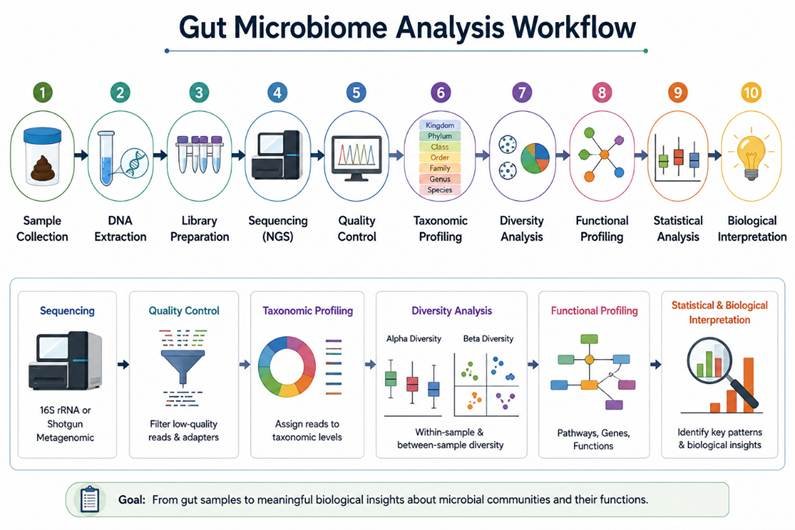
A typical gut microbiome sequencing project involves several stages:
Sample Collection → DNA Extraction → Library Preparation → Sequencing → Quality Control → Taxonomic Profiling → Diversity Analysis → Functional Profiling → Statistical Analysis → Biological Interpretation
Sample Collection
Fecal samples are commonly used for gut microbiome studies because they provide a relatively accessible representation of intestinal microbial communities. Proper collection, stabilization, storage, and transportation are essential for maintaining microbial DNA integrity and minimizing technical variation.
DNA Extraction
Microbial DNA is isolated from the sample using an appropriate extraction protocol. Since gut samples contain microorganisms with different cell-wall characteristics, efficient lysis is important for obtaining representative microbial DNA.
Sequencing
Depending on the research question, samples can undergo 16S rRNA sequencing or shotgun metagenomic sequencing using an appropriate NGS platform.
Bioinformatics Analysis
Raw sequencing data undergo quality control, followed by taxonomic and/or functional analysis.
Depending on the study design, analysis may include:
- Read quality assessment
- Adapter and low-quality read removal
- Taxonomic classification
- Alpha diversity
- Beta diversity
- Differential abundance analysis
- Microbial community profiling
- Functional pathway analysis
- KEGG pathway profiling
- Antibiotic resistance profiling
- Virulence factor analysis
- Correlation and multivariate analysis
Key Insights from Gut Microbiome Analysis
Gut microbiome sequencing can help researchers investigate several biological questions.
Microbial Diversity
Alpha diversity describes microbial diversity within individual samples, while beta diversity evaluates differences in microbial community composition between samples or study groups.
These analyses can reveal whether microbial communities differ between healthy and disease groups, treatment conditions, dietary interventions, or different experimental time points.
Differential Microbial Abundance
Comparative analysis can identify microorganisms that are significantly enriched or depleted in specific groups.
For example, researchers may investigate microbial signatures associated with:
- Disease states
- Treatment response
- Dietary interventions
- Age or lifestyle
- Disease progression
- Experimental conditions
Functional Potential
Shotgun metagenomics can provide insights into microbial genes and metabolic pathways, allowing researchers to investigate functions associated with nutrient metabolism, short-chain fatty acid production, inflammation, host-microbe interactions, and other biological processes.
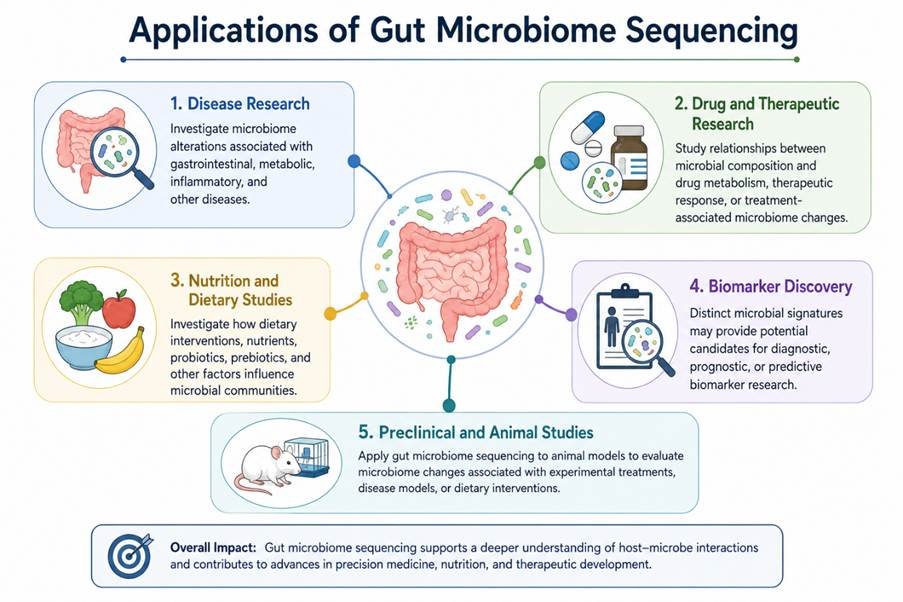
Applications of Gut Microbiome Sequencing
Gut microbiome analysis is increasingly being applied across biomedical and life-science research.
Disease Research - Researchers can investigate microbiome alterations associated with gastrointestinal, metabolic, inflammatory, and other diseases.
Drug and Therapeutic Research - Microbiome profiling can help study relationships between microbial composition and drug metabolism, therapeutic response, or treatment-associated microbiome changes.
Nutrition and Dietary Studies - Sequencing can be used to investigate how dietary interventions, nutrients, probiotics, prebiotics, and other factors influence microbial communities.
Biomarker Discovery - Distinct microbial signatures may provide potential candidates for diagnostic, prognostic, or predictive biomarker research.
Preclinical and Animal Studies - Gut microbiome sequencing can also be applied to animal models to evaluate microbiome changes associated with experimental treatments, disease models, or dietary interventions.
Why Choose the Right Sequencing Approach?
The choice between 16S rRNA sequencing and shotgun metagenomics depends on the research question, sample type, required taxonomic resolution, study size, and desired functional information.
| Feature | 16S rRNA Sequencing | Shotgun Metagenomics |
| Main focus | Bacterial profiling | Whole microbial community |
| Taxonomic resolution | Generally genus/species level depending on region and database | Can reach species/strain level |
| Functional analysis | Limited/inferred | Direct functional profiling |
| Cost | Relatively lower | Relatively higher |
| Best suited for | Community profiling | Comprehensive taxonomic + functional studies |
Our Gut Microbiome Sequencing Services
At CellSeq Solutions LLP, we support researchers and institutions with end-to-end microbiome research solutions tailored to their study objectives.
Our services can include:
- Gut/fecal microbiome sequencing
- 16S rRNA gene sequencing
- Shotgun metagenomic sequencing
- Microbial DNA extraction
- Sequencing library preparation
- Sequencing data quality control
- Taxonomic profiling
- Alpha and beta diversity analysis
- Differential abundance analysis
- Functional and pathway analysis
- Microbiome statistical analysis
- Data visualization and biological interpretation
From Microbial Profiles to Biological Insights
Gut microbiome research is moving beyond simple microbial identification toward integrated analysis of microbial composition, function, host interactions, and disease-associated signatures.
Whether the objective is to characterize microbial diversity, compare treatment groups, discover potential biomarkers, or investigate microbial metabolic pathways, selecting an appropriate sequencing strategy and robust bioinformatics workflow is critical.