

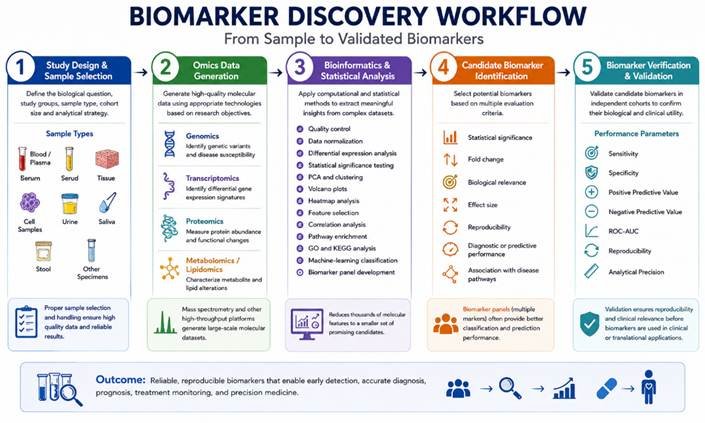
Biomarker discovery is a critical component of modern biomedical research, drug development, disease research, and precision medicine. By identifying measurable molecular or biological characteristics associated with a disease, physiological state, or therapeutic response, researchers can uncover new opportunities for early disease detection, diagnosis, prognosis, treatment monitoring, and patient stratification.
At CellSeq Solutions LLP, we support biomarker discovery research through an integrated approach combining genomics, transcriptomics, proteomics, metabolomics, bioinformatics, and statistical analysis to transform complex biological datasets into meaningful research insights.
What Is a Biomarker?
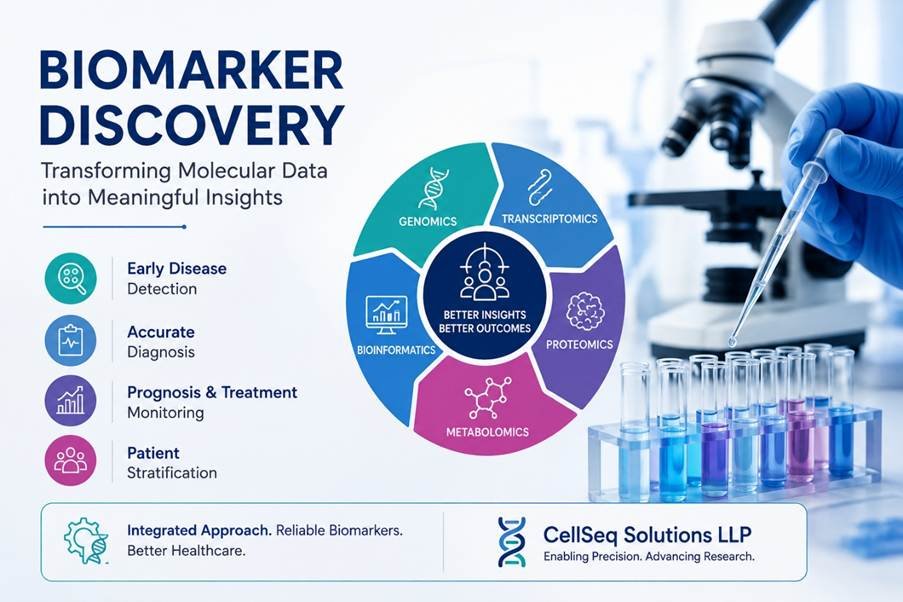
A biomarker is a measurable characteristic that can indicate a normal biological process, disease-associated process, or response to a therapeutic intervention. Biomarkers can include DNA variants, RNA expression patterns, proteins, metabolites, lipids, cellular characteristics, and other measurable biological features.
Depending on the research objective, biomarkers may be used as:
- Diagnostic biomarkers – help identify or distinguish a disease.
- Prognostic biomarkers – provide information about likely disease progression or outcomes.
- Predictive biomarkers – help predict response to a particular treatment.
- Risk biomarkers – indicate an increased likelihood of developing a condition.
- Monitoring biomarkers – help track disease progression or treatment response.
What Is Biomarker Discovery?
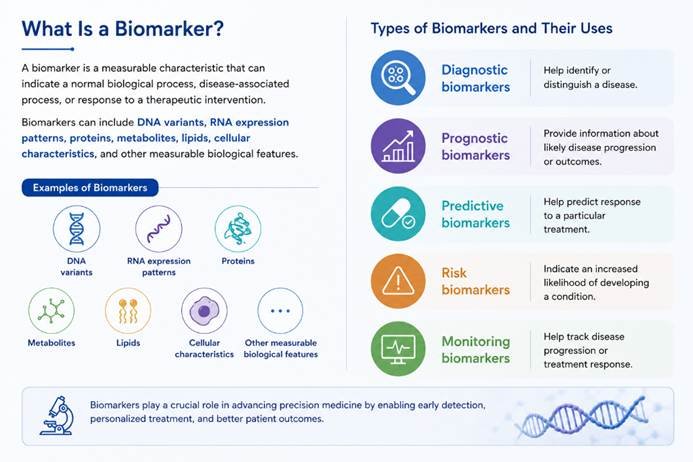
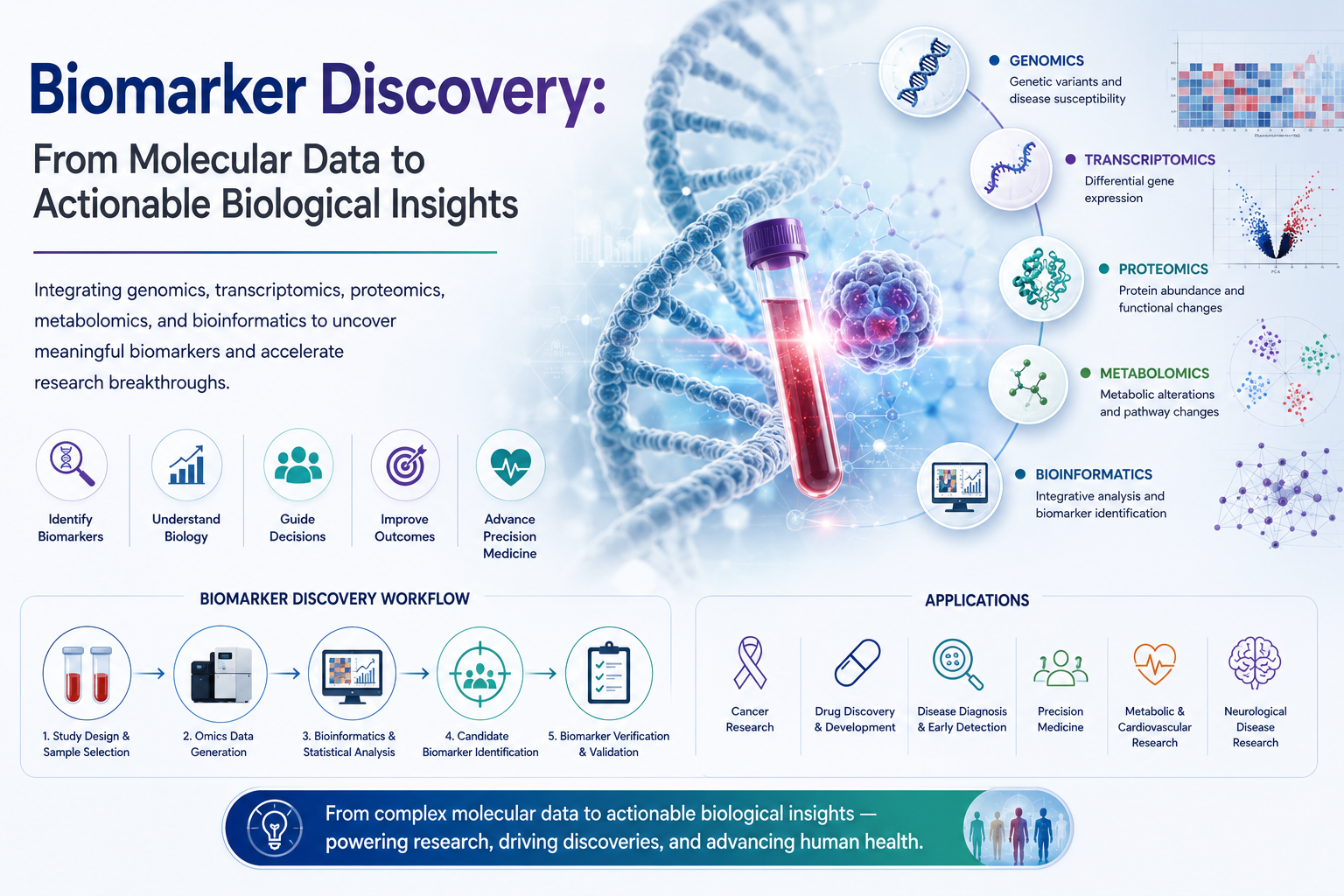
Biomarker discovery involves systematically identifying molecular features that differ between biological conditions—for example, healthy versus diseased samples or responders versus non-responders. Modern biomarker discovery increasingly uses high-throughput omics technologies, allowing researchers to investigate thousands of molecular features simultaneously. Genomics, transcriptomics, proteomics, and metabolomics can each provide different layers of information about disease biology.
For example:
Genomics → genetic variants and disease susceptibility
Transcriptomics → differential gene expression
Proteomics → protein abundance and functional changes
Metabolomics → metabolic alterations and pathway changes
Integrating multiple omics layers can provide a more comprehensive understanding of disease mechanisms and potential biomarker candidates.
Biomarker Discovery Workflow
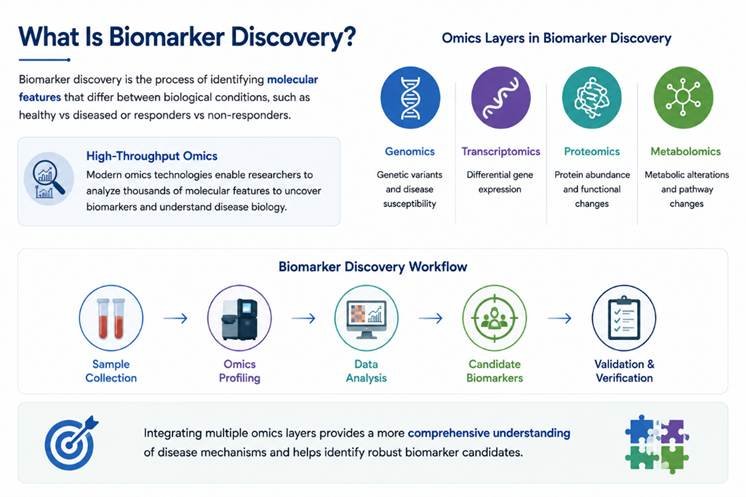
A robust biomarker discovery study generally involves several interconnected stages:
1. Study Design & Sample Selection
The first step is defining the biological question, study groups, sample type, cohort size, and analytical strategy. Depending on the research objective, samples may include:
- Blood or plasma
- Serum
- Tissue
- Cell samples
- Urine
- Saliva
- Stool
- Other biological specimens
Appropriate sample selection and pre-analytical handling are essential because sample quality can directly influence downstream molecular measurements.
2. Omics Data Generation
Different technologies can be selected according to the biological question.
Genomics and Transcriptomics can identify genetic variants and gene-expression signatures.
Proteomics can measure changes in protein abundance and help identify protein-based biomarker candidates.
Metabolomics and Lipidomics can characterize changes in metabolites and lipid species associated with disease or physiological conditions.
Mass spectrometry-based approaches, for example, can generate large-scale molecular datasets suitable for discovering candidate protein or metabolite biomarkers.
3. Bioinformatics & Statistical Analysis
High-throughput experiments generate complex datasets that require systematic computational analysis. Depending on the project, analysis may include:
- Quality control
- Data normalization
- Differential expression analysis
- Statistical significance testing
- PCA and clustering
- Volcano plots
- Heatmap analysis
- Feature selection
- Correlation analysis
- Pathway enrichment
- GO and KEGG analysis
- Machine-learning-based classification
- Biomarker panel development
These analyses help researchers narrow thousands of molecular features down to a smaller group of promising biomarker candidates.
4. Candidate Biomarker Identification
Potential biomarkers can be selected based on factors such as:
- Statistical significance
- Fold change
- Biological relevance
- Effect size
- Reproducibility
- Diagnostic or predictive performance
- Association with disease pathways
In many cases, a combination of biomarkers, rather than a single molecule, may provide stronger classification or prediction performance.
5. Biomarker Verification & Validation
Discovery is only the beginning. Candidate biomarkers require additional testing to determine whether their observed association is reproducible and clinically or biologically meaningful. A commonly used development pathway consists of discovery, verification, and validation, with progressively larger or independent sample sets used to evaluate promising candidates.
Important performance parameters can include:
- Sensitivity
- Specificity
- Positive predictive value
- Negative predictive value
- ROC-AUC
- Reproducibility
- Analytical precision
Validation is particularly important before a candidate biomarker can be considered for clinical or translational applications.
Applications of Biomarker Discovery
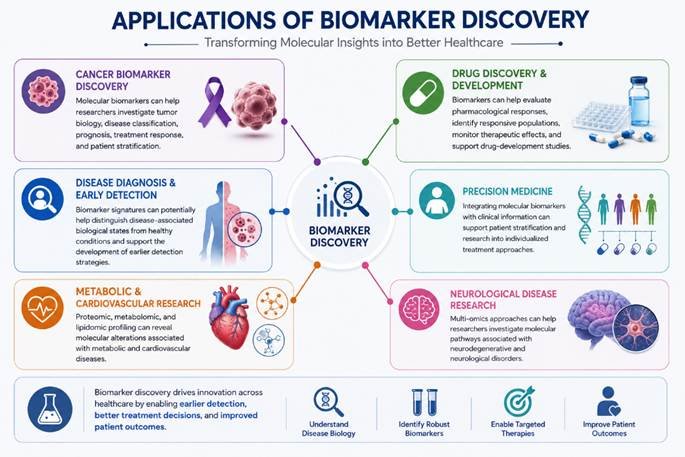
Biomarker research has applications across multiple areas of life sciences and healthcare research.
Cancer Biomarker Discovery - Molecular biomarkers can help researchers investigate tumor biology, disease classification, prognosis, treatment response, and patient stratification.
Drug Discovery & Development - Biomarkers can help evaluate pharmacological responses, identify responsive populations, monitor therapeutic effects, and support drug-development studies.
Disease Diagnosis & Early Detection - Biomarker signatures can potentially help distinguish disease-associated biological states from healthy conditions and support the development of earlier detection strategies.
Precision Medicine - Integrating molecular biomarkers with clinical information can support patient stratification and research into individualized treatment approaches.
Metabolic & Cardiovascular Research - Proteomic, metabolomic, and lipidomic profiling can reveal molecular alterations associated with metabolic and cardiovascular diseases.
Neurological Disease Research - Multi-omics approaches can help researchers investigate molecular pathways associated with neurodegenerative and neurological disorders.
Why Multi-Omics Matters in Biomarker Discovery
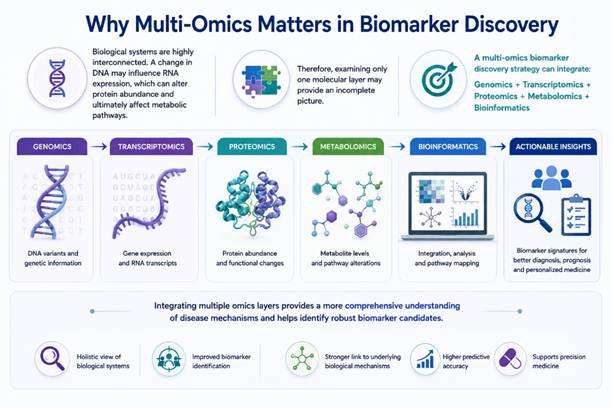
Biological systems are highly interconnected. A change in DNA may influence RNA expression, which can alter protein abundance and ultimately affect metabolic pathways.
Therefore, examining only one molecular layer may provide an incomplete picture.
A multi-omics biomarker discovery strategy can integrate:
Genomics + Transcriptomics + Proteomics + Metabolomics + Bioinformatics
This integrated approach can help researchers identify molecular signatures that are more closely connected to underlying biological mechanisms.
Our Biomarker Discovery Approach at CellSeq Solutions LLP
At CellSeq Solutions LLP, we provide research-focused solutions designed to help investigators move from biological questions to interpretable molecular insights.
Our capabilities can support projects involving:
- Genomics & sequencing-based biomarker research
- Transcriptomics and gene-expression profiling
- Proteomics and protein biomarker discovery
- Metabolomics & lipidomics
- Mass spectrometry-based molecular profiling
- Bioinformatics & statistical analysis
- Pathway and functional analysis
- Candidate biomarker identification
- Biomarker verification and validation support
The exact workflow can be customized according to the disease area, sample type, research hypothesis, cohort design, and desired biological endpoint.
From Discovery to Biological Insight
The ultimate goal of biomarker discovery is not simply to generate a list of differentially expressed genes, proteins, or metabolites. The objective is to identify reproducible and biologically meaningful molecular signatures that can answer important research questions.
A successful workflow therefore connects:
Sample → Omics Data → Bioinformatics → Candidate Biomarkers → Validation → Biological Interpretation
With appropriate study design, analytical methods, and validation strategies, biomarker discovery can become a powerful component of translational research and precision medicine.