

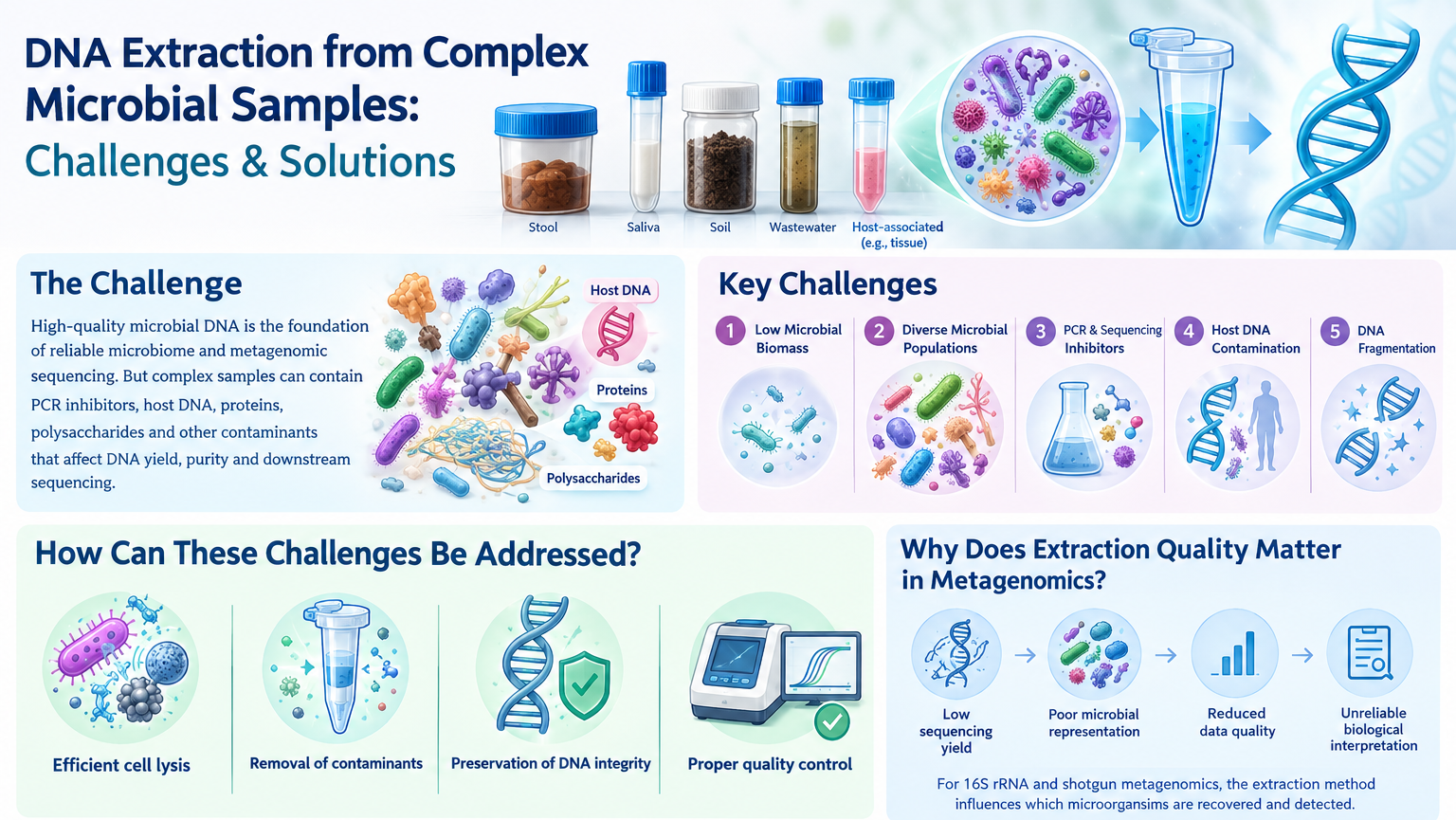
Introduction
High-quality microbial DNA is the foundation of reliable microbiome and metagenomic sequencing. But extracting DNA from complex samples such as stool, saliva, soil, wastewater, and host-associated specimens can be challenging. The sample matrix can contain PCR inhibitors, host DNA, proteins, polysaccharides, and other contaminants that affect DNA yield, purity, and downstream sequencing.
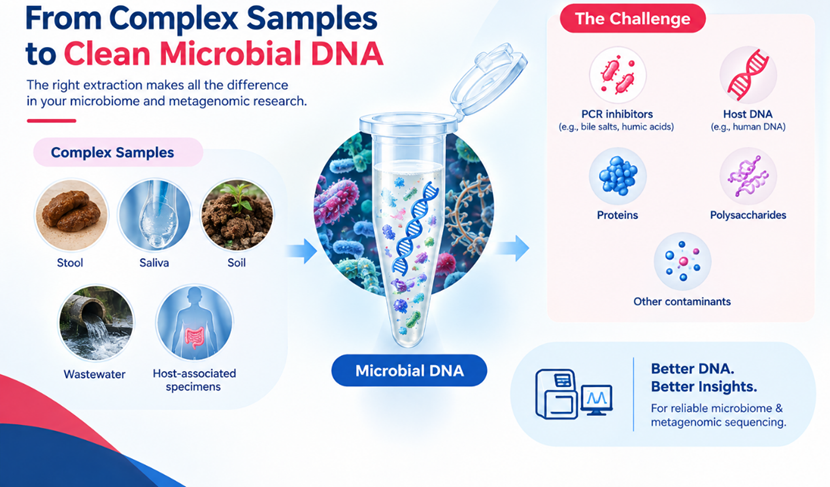
Key Challenges in Microbial DNA Extraction
🧬 1. Low Microbial Biomass
Some samples contain very small amounts of microbial DNA, making efficient extraction essential.
🦠 2. Diverse Microbial Populations
Bacteria, fungi, and other microorganisms have different cell-wall structures. A single extraction approach may not efficiently lyse every organism.
🧪 3. PCR & Sequencing Inhibitors
Compounds such as bile salts, humic substances, and other sample-derived contaminants can interfere with PCR, library preparation, and sequencing.
🧑🔬 4. Host DNA Contamination
Host-associated samples may contain substantial amounts of human DNA, reducing the proportion of microbial reads available for analysis.
📉 5. DNA Fragmentation
Harsh extraction conditions can damage DNA and affect downstream applications, particularly shotgun metagenomic sequencing.
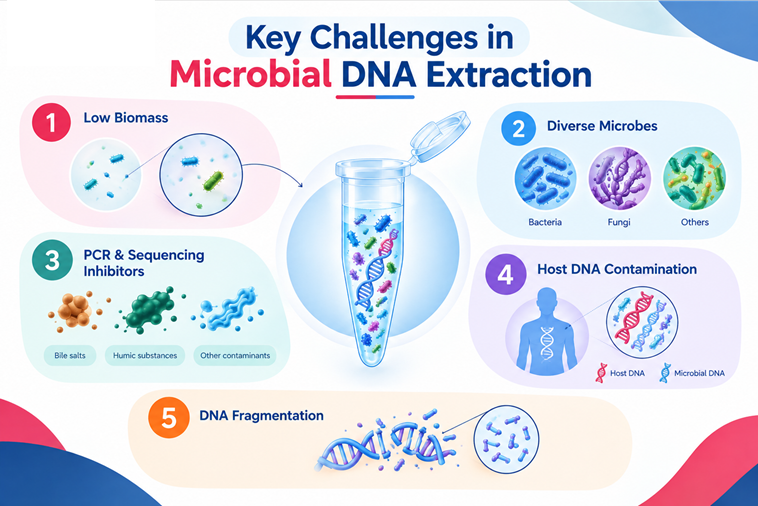
How Can These Challenges Be Addressed?
A reliable microbial DNA extraction strategy should focus on:
✔ Efficient cell lysis
Mechanical and/or enzymatic lysis can improve recovery from diverse microorganisms.
✔ Removal of contaminants
Purification steps help produce DNA suitable for PCR and sequencing.
✔ Preservation of DNA integrity
Gentle handling and appropriate storage help maintain DNA quality.
✔ Proper quality control
Assessing DNA concentration, purity, and integrity before sequencing helps prevent downstream failures.
Why Does Extraction Quality Matter in Metagenomics?
Poor-quality DNA can lead to:
Low sequencing yield → Poor microbial representation → Reduced data quality → Unreliable biological interpretation
For 16S rRNA sequencing and shotgun metagenomics, the extraction method can influence which microorganisms are successfully recovered and detected.
Conclusion
Good metagenomic data starts with good DNA.
Choosing an extraction strategy according to the sample type, microbial diversity, biomass, and downstream sequencing method is critical for obtaining reproducible and biologically meaningful results. CellSeq Solutions LLP supports microbial genomics and metagenomic sequencing workflows, from sample processing to sequencing and bioinformatics analysis.