

Introduction
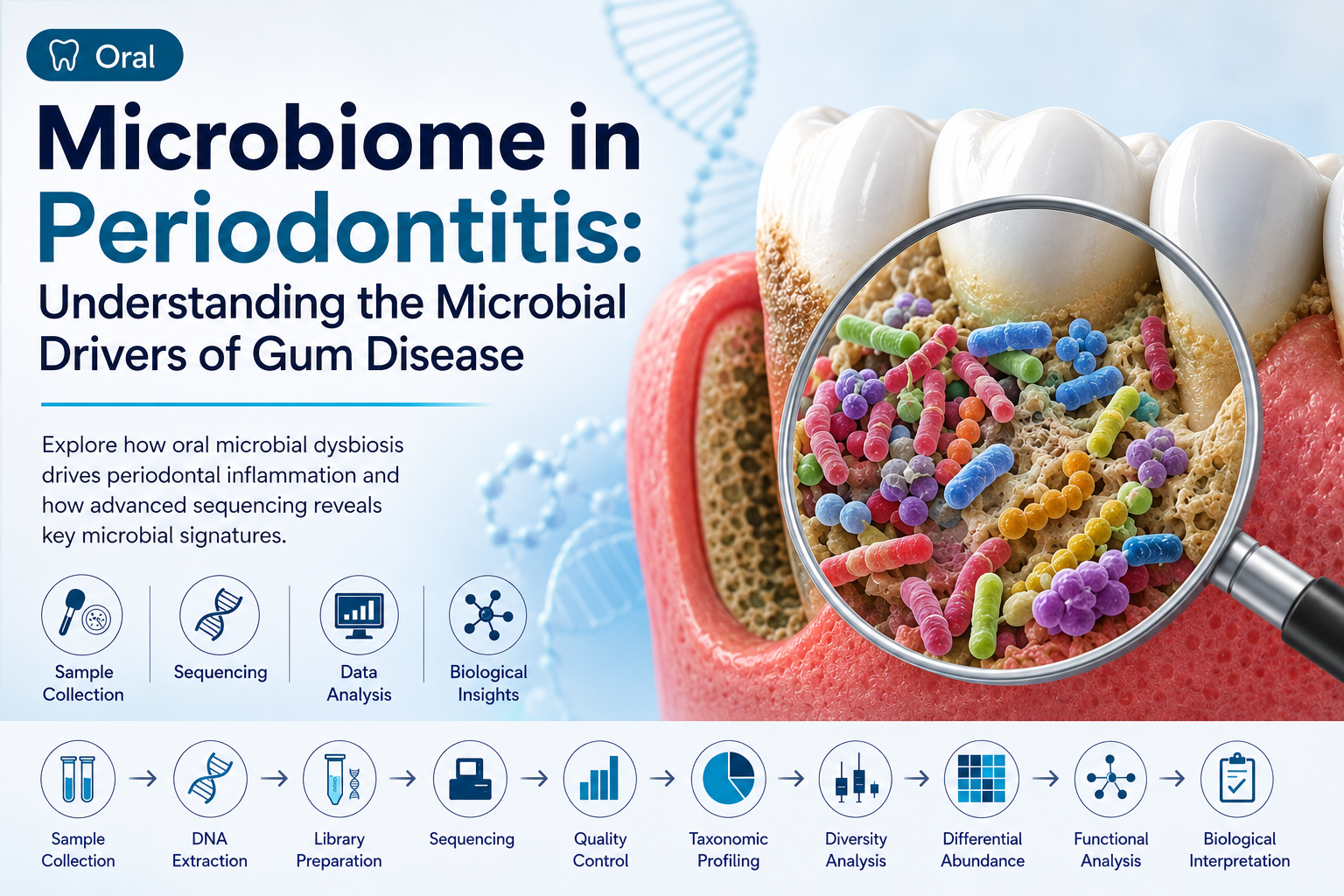
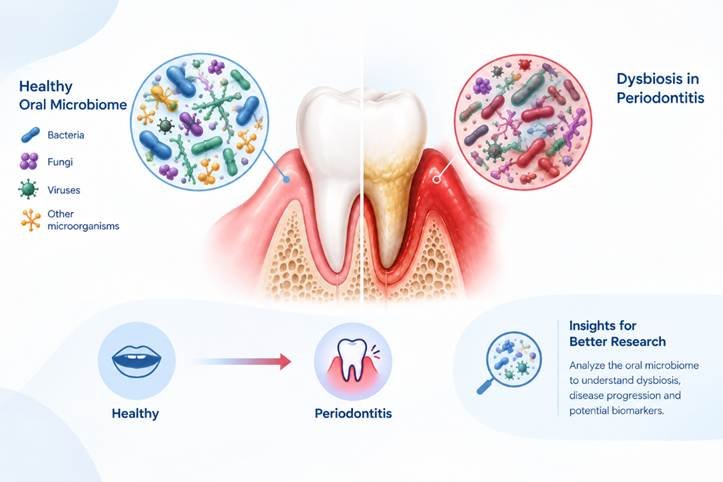
The oral microbiome is a complex community of bacteria, fungi, viruses, and other microorganisms that colonize the oral cavity. Under healthy conditions, these microorganisms coexist with the host and contribute to oral homeostasis. However, changes in microbial composition and function can disrupt this balance and contribute to periodontitis, a chronic inflammatory disease affecting the tissues supporting the teeth. Understanding the oral microbiome in periodontitis can provide valuable insights into microbial dysbiosis, disease progression, and potential biomarkers for periodontal research.
What Happens to the Oral Microbiome in Periodontitis?
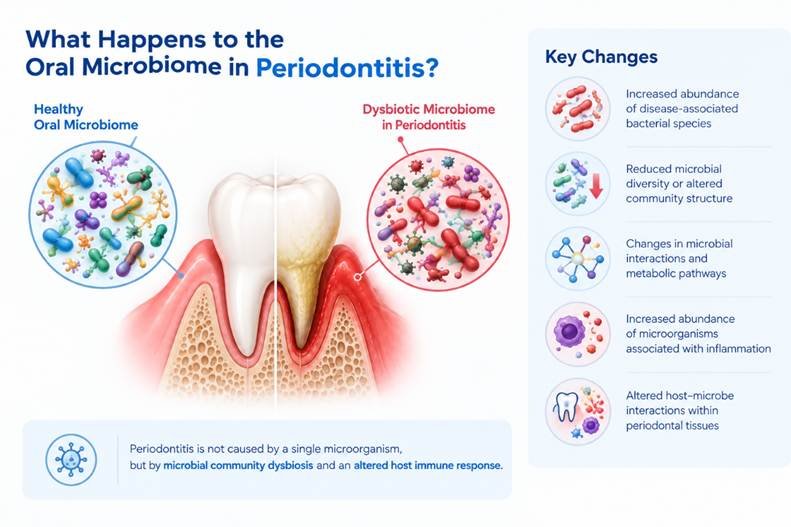
Periodontitis is associated with a shift from a relatively balanced microbial community toward a dysbiotic microbiome. Changes may include:
- Increased abundance of disease-associated bacterial species
- Reduced microbial diversity or altered community structure
- Changes in microbial interactions and metabolic pathways
- Increased abundance of microorganisms associated with inflammation
- Altered host–microbe interactions within periodontal tissues
Rather than being caused by a single microorganism, periodontitis is increasingly understood as a disease involving microbial community dysbiosis and an altered host immune response.
Key Microbial Changes Associated with Periodontitis
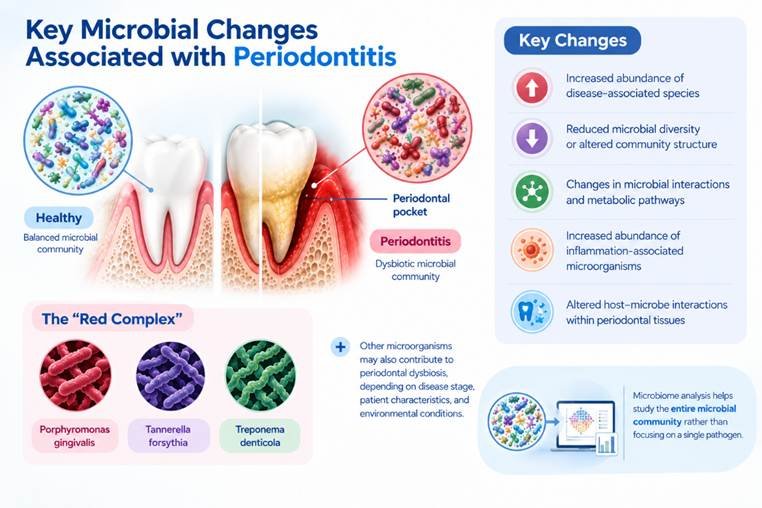
Periodontal pockets can provide an environment that supports the growth of anaerobic and inflammation-associated microorganisms. Research has identified several organisms frequently associated with periodontal disease, including members of the so-called "red complex", such as:
- Porphyromonas gingivalis
- Tannerella forsythia
- Treponema denticola
Other microorganisms may also contribute to periodontal dysbiosis, depending on disease stage, patient characteristics, and environmental conditions.
Importantly, microbiome analysis allows researchers to study the entire microbial community rather than focusing on a single pathogen.
How Is the Oral Microbiome Studied?
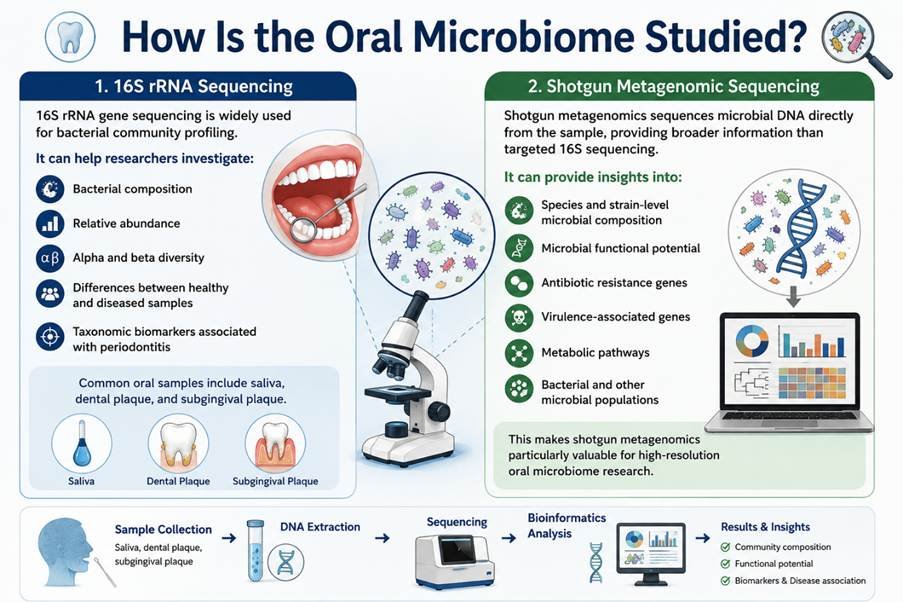
1. 16S rRNA Sequencing
16S rRNA gene sequencing is widely used for bacterial community profiling. It can help researchers investigate:
- Bacterial composition
- Relative abundance
- Alpha and beta diversity
- Differences between healthy and diseased samples
- Taxonomic biomarkers associated with periodontitis
Common oral samples include saliva, dental plaque, and subgingival plaque.
2. Shotgun Metagenomic Sequencing
Shotgun metagenomics sequences microbial DNA directly from the sample, providing broader information than targeted 16S sequencing. It can provide insights into:
- Species and strain-level microbial composition
- Microbial functional potential
- Antibiotic resistance genes
- Virulence-associated genes
- Metabolic pathways
- Bacterial and other microbial populations
This makes shotgun metagenomics particularly valuable for high-resolution oral microbiome research.
Oral Microbiome Analysis Workflow
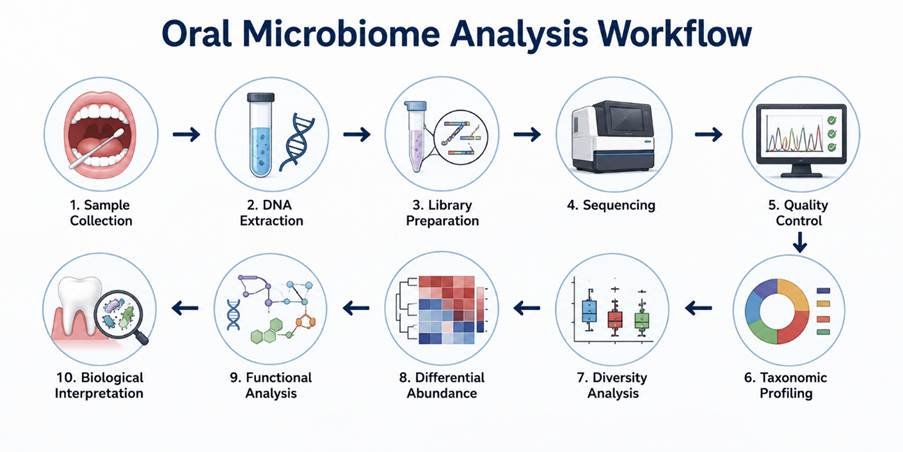
A typical periodontitis microbiome analysis workflow includes:
Sample Collection → DNA Extraction → Library Preparation → Sequencing → Quality Control → Taxonomic Profiling → Diversity Analysis → Differential Abundance → Functional Analysis → Biological Interpretation
Depending on the study design, researchers can compare:
Healthy vs. Periodontitis
Before vs. After Treatment
Early vs. Advanced Periodontitis
These comparisons can help identify microbial signatures associated with disease status or treatment response.
What Can Oral Microbiome Analysis Reveal?
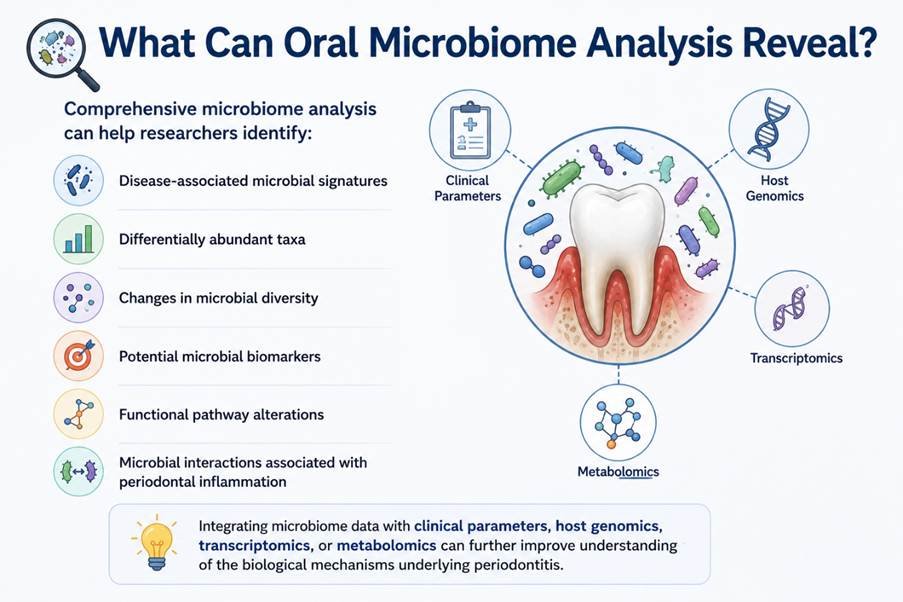
Comprehensive microbiome analysis can help researchers identify:
- Disease-associated microbial signatures
- Differentially abundant taxa
- Changes in microbial diversity
- Potential microbial biomarkers
- Functional pathway alterations
- Microbial interactions associated with periodontal inflammation
Integrating microbiome data with clinical parameters, host genomics, transcriptomics, or metabolomics can further improve understanding of the biological mechanisms underlying periodontitis.
Conclusion
The oral microbiome in periodontitis represents an important area of microbiome and periodontal research. Advances in 16S rRNA sequencing, shotgun metagenomics, and microbiome data analysis enable researchers to investigate microbial communities at increasing levels of resolution. By moving beyond the study of individual pathogens and examining the broader microbial ecosystem, researchers can better understand oral microbial dysbiosis, periodontal disease mechanisms, and potential biomarkers.