

Introduction
High-quality DNA begins with high-quality sample collection. In genomics and molecular biology, poor sample collection can affect DNA yield, purity, integrity, and downstream analysis. This makes the selection of an appropriate biological sample collection system an important step in genomic workflows. Isohelix DNA collection systems are designed to simplify the collection, stabilization, and processing of DNA samples, particularly from non-invasive biological sources such as saliva and buccal cells. These systems can support applications ranging from genetic research and biobanking to molecular diagnostics and population genomics.
Why Is DNA Sample Collection Important?
DNA extraction and downstream genomic analysis depend heavily on the quality of the starting material. Samples may undergo degradation or contamination during collection, transportation, or storage, potentially affecting downstream applications. An effective DNA collection system should therefore provide:
- Efficient biological sample collection
- Consistent DNA recovery
- Protection of DNA during transportation and storage
- Reduced risk of contamination
- Compatibility with downstream DNA extraction and molecular workflows
For large-scale genomic studies, standardized collection is particularly important because thousands of samples may need to be processed using consistent protocols.
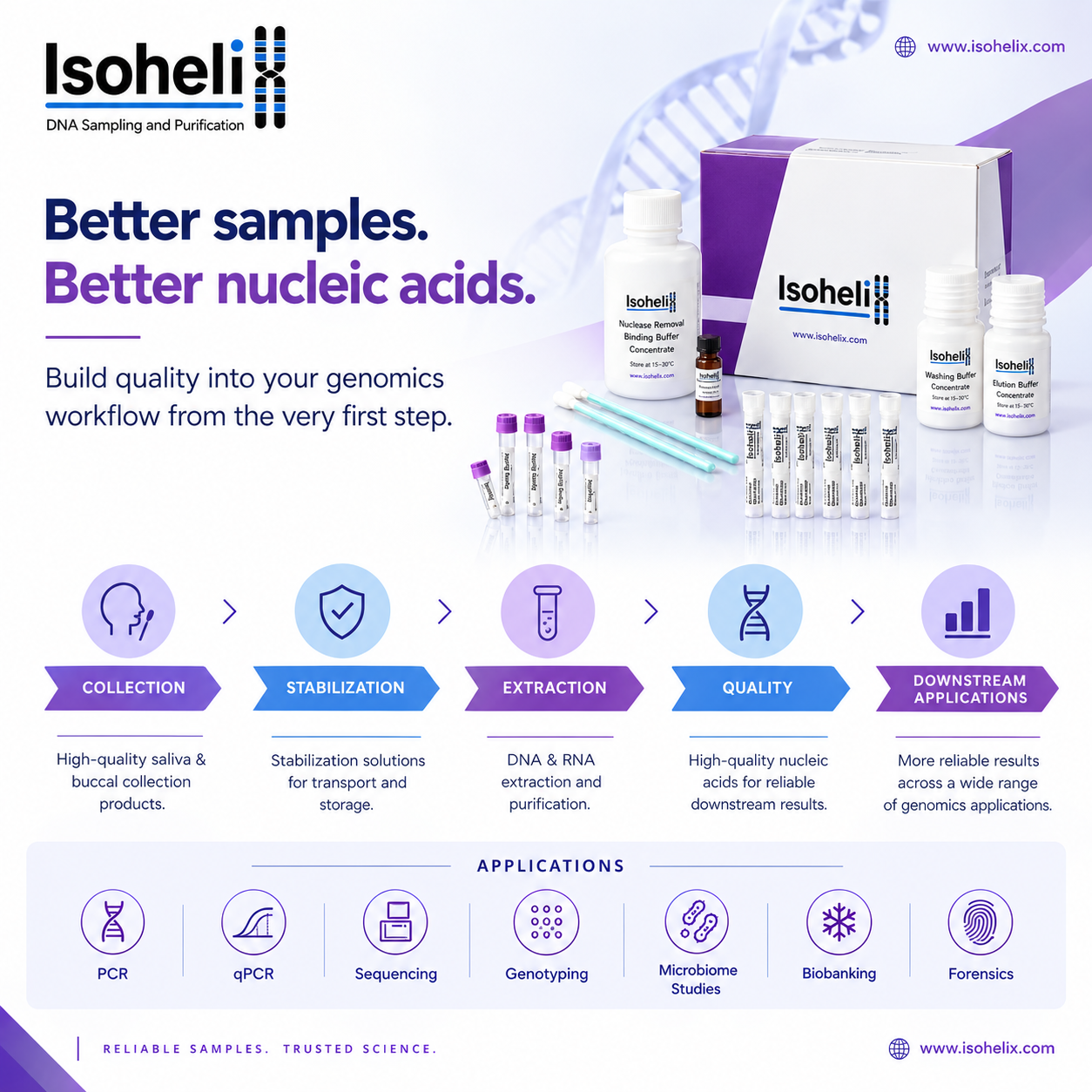
Isohelix: Simplifying DNA Sample Collection
Isohelix provides DNA collection and stabilization technologies designed to facilitate the collection of biological samples without requiring invasive procedures such as venipuncture. Buccal and saliva-based collection can be particularly useful when working with:
- Population-scale genetic studies
- Biobanking projects
- Human genetics research
- Pharmacogenomics
- Precision medicine research
- Molecular diagnostics
- Epidemiological studies
The use of non-invasive collection methods can also improve participant convenience and simplify sample collection outside conventional laboratory environments.
From Sample Collection to Genomic Analysis
A typical genomic workflow can be represented as:
Sample Collection → DNA Stabilization → DNA Extraction → Quality Control → PCR/NGS/Genotyping → Bioinformatics Analysis
The collection stage is the foundation of this workflow. Consistent sample collection helps laboratories obtain DNA that can subsequently be evaluated for concentration, purity, and integrity before downstream analysis. Depending on the research objective, extracted DNA may be used for applications such as PCR, genotyping, sequencing, SNP analysis, and next-generation sequencing (NGS).
Applications in Modern Genomics
The growing adoption of genomics has increased the demand for scalable and reliable sample collection technologies.
1. Population Genomics
Large genetic studies require collection from hundreds or thousands of individuals. Non-invasive collection methods can make participant recruitment and sample acquisition more convenient.
2. Biobanking
Biobanks require standardized sample collection, identification, storage, and processing. Reliable collection systems can help maintain sample quality throughout the workflow.
3. Precision Medicine
Genomic DNA is increasingly used to understand individual genetic variation and its relationship with disease susceptibility, treatment response, and drug metabolism.
4. Molecular Research
Researchers working on genetic variants, biomarkers, disease-associated genes, and molecular mechanisms require dependable DNA as the starting material for laboratory analysis.
Why Choose a Standardized Collection Workflow?
In genomic research, analytical accuracy does not depend only on sequencing platforms or bioinformatics pipelines. Pre-analytical sample quality is equally important.
A standardized collection workflow can help laboratories improve:
Consistency → Sample Quality → DNA Recovery → Downstream Reproducibility
This becomes especially important in multi-center studies and high-throughput genomic projects where samples are collected at different locations and processed over extended periods.
Conclusion
As genomics continues to expand across research, diagnostics, biobanking, and precision medicine, reliable biological sample collection remains a critical component of the workflow. Isohelix DNA collection solutions provide a convenient approach to collecting and stabilizing DNA samples, particularly for studies requiring non-invasive, scalable, and standardized sample collection. From population genomics to precision medicine, the quality of the first biological sample can ultimately influence the quality of the genomic data generated downstream.
Better samples. Better DNA. Better genomics.