

What is Genomic Sequencing?
Genomic sequencing is a powerful molecular biology technique used to determine the precise order of nucleotides in an organism’s DNA. By analyzing an individual's complete genome or specific regions of DNA, researchers can identify genetic variations associated with diseases, traits, and biological processes.Advances in Next-Generation Sequencing (NGS) have made genomic sequencing faster, more scalable, and increasingly accessible for research and clinical applications.
How Does Genomic Sequencing Work?
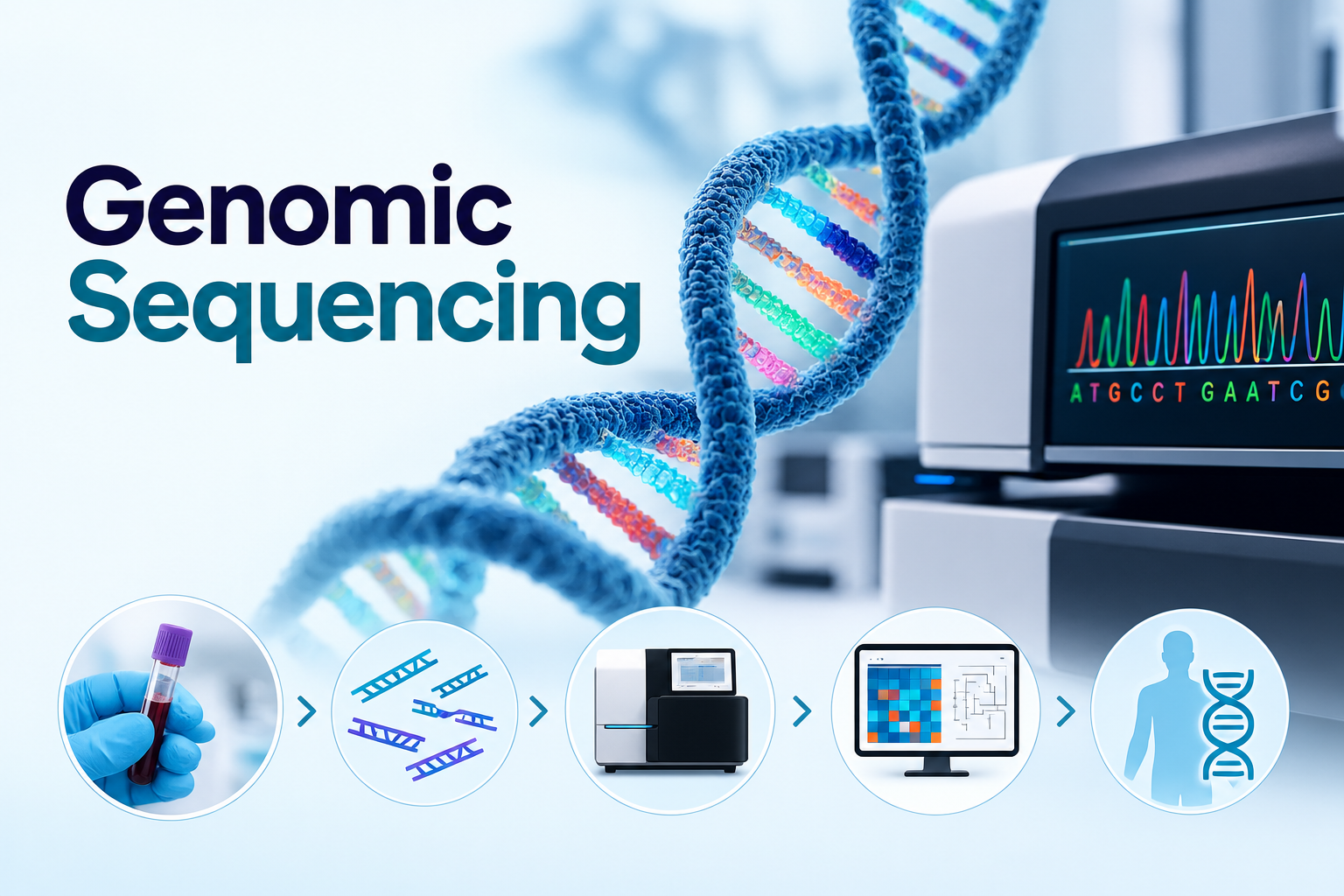
A typical genomic sequencing workflow involves:
- Sample Collection – DNA is extracted from biological samples such as blood, saliva, or tissue.
- DNA Preparation – The extracted DNA is fragmented and prepared for sequencing.
- Sequencing – Sequencing platforms generate millions of DNA sequence reads.
- Bioinformatics Analysis – Computational tools process and analyze the sequencing data.
- Variant Interpretation – Identified genetic variants are evaluated to understand their potential biological or clinical significance.
Applications of Genomic Sequencing
Genomic sequencing has applications across several areas, including:
- Disease Research: Identification of genetic mutations linked to diseases.
- Cancer Genomics: Detection of tumor-specific genomic alterations.
- Rare Disease Diagnosis: Identification of variants responsible for inherited disorders.
- Precision Medicine: Supporting personalized treatment strategies based on genomic information.
- Microbial Genomics: Studying pathogens, microbial diversity, and antibiotic resistance.
- Population Genomics: Understanding genetic diversity and evolutionary relationships.
Why is Genomic Sequencing Important?
The ability to analyze genomic information at scale has transformed modern biological research. Combining sequencing technologies with bioinformatics and computational analysis enables researchers to convert large volumes of genomic data into meaningful biological insights. As sequencing technologies continue to advance, genomic sequencing is expected to play an increasingly important role in precision medicine, drug discovery, cancer research, and biotechnology.
Conclusion
Genomic sequencing provides researchers with detailed information about DNA and genetic variation. From understanding disease mechanisms to developing personalized healthcare approaches, it has become an essential technology in modern genomics and bioinformatics.