
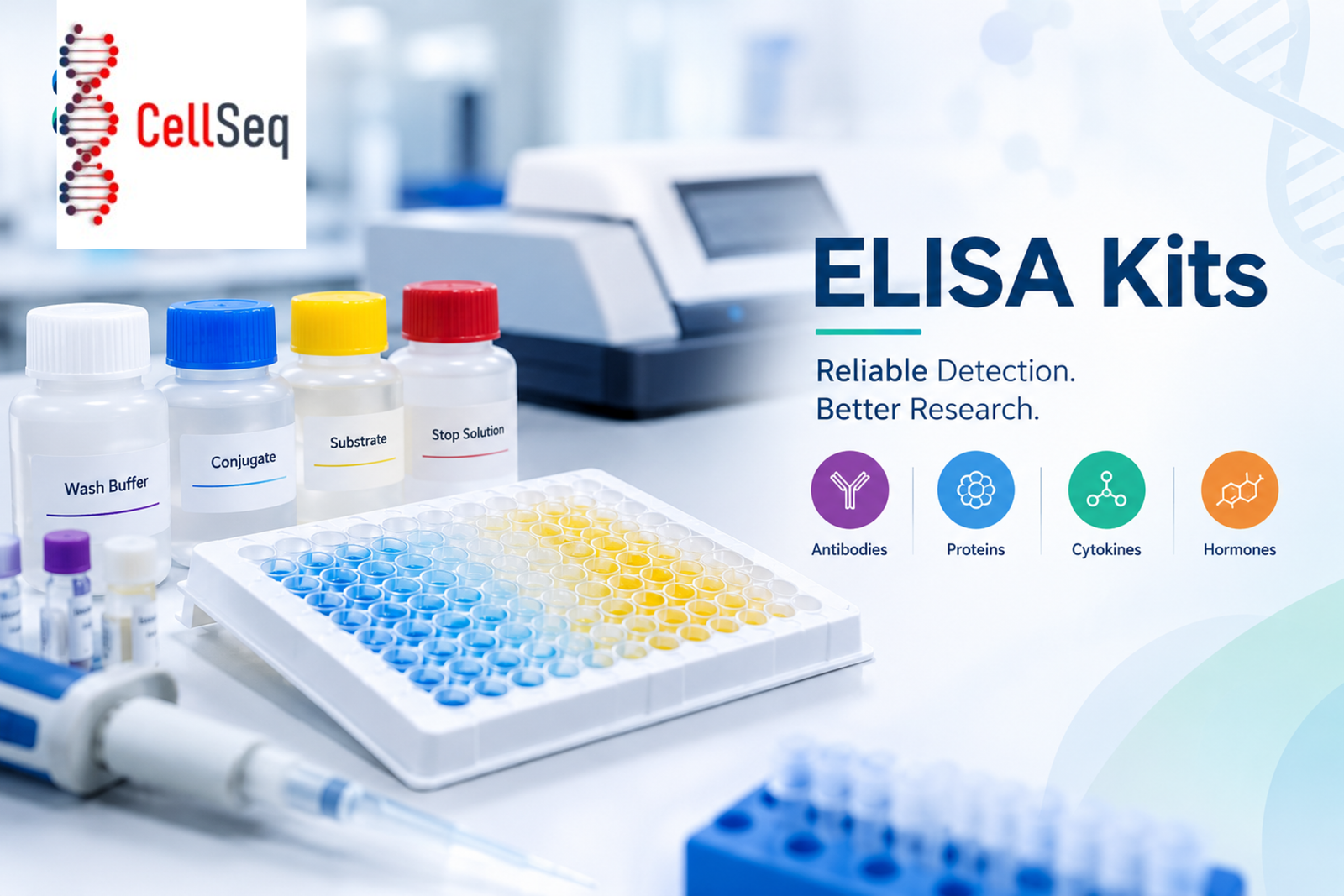

Introduction to ELISA Kits
ELISA kits are essential laboratory tools used to detect and quantify specific proteins, antibodies, antigens, hormones, and other biological molecules in research samples. ELISA stands for Enzyme-Linked Immunosorbent Assay, a widely used analytical technique in biotechnology, immunology, molecular biology, and biomedical research. With their ability to provide sensitive and specific measurements, ELISA kits support applications ranging from biomarker analysis and immune response studies to disease research and drug development. Selecting the right ELISA kit is important for obtaining reliable, reproducible, and meaningful experimental results.
What Are ELISA Kits?
ELISA kits are ready-to-use or configurable assay systems designed to identify and measure target molecules in biological samples. They typically contain essential reagents, such as capture or detection antibodies, standards, buffers, enzyme conjugates, and substrate solutions. Many kits also include pre-coated microplates and detailed assay protocols. These kits use antigen–antibody interactions combined with an enzyme-mediated color reaction to measure the presence or concentration of a target analyte. The resulting signal is commonly measured using a microplate reader.
How Do ELISA Kits Work?
Most ELISA kits follow a series of steps to detect a specific target molecule:
- Sample preparation: Biological samples are prepared according to the kit protocol.
- Target binding: The target antigen or antibody binds to a specific antibody or antigen in the assay.
- Detection: An enzyme-linked detection reagent recognizes the target or forms part of the detection complex.
- Signal development: A suitable substrate reacts with the enzyme to produce a measurable signal, often a color change.
- Result analysis: Absorbance is measured using a microplate reader and compared with a standard curve to estimate the analyte concentration.
The exact workflow depends on the ELISA format, kit design, and target analyte.
Types of ELISA Kits
Different ELISA kits are designed for different analytical requirements.
1. Direct ELISA Kits
Direct ELISA uses an enzyme-labelled antibody that binds directly to the target antigen. This format has a relatively simple workflow and can reduce assay time, although its sensitivity may be limited compared with some alternative formats.
2. Indirect ELISA Kits
Indirect ELISA uses a primary antibody that binds to the target, followed by an enzyme-linked secondary antibody. This approach is commonly used to detect antibodies and study immune responses.
3. Sandwich ELISA Kits
Sandwich ELISA kits use a capture antibody and a detection antibody to recognize the target molecule. They are widely used for quantifying proteins, cytokines, growth factors, and other biomarkers in complex biological samples.
4. Competitive ELISA Kits
Competitive ELISA measures target analytes through competition between sample analytes and a labelled or immobilized assay component. In many competitive formats, a higher analyte concentration produces a lower signal. These kits are useful for certain small molecules, hormones, and analytes that are difficult to detect using sandwich assays.
Applications of ELISA Kits in Research
ELISA kits are widely used across life science research and biotechnology.
- Immunology: Measuring antibodies, immunoglobulins, and immune response markers.
- Cytokine analysis: Quantifying cytokines and chemokines involved in inflammation and immune regulation.
- Cancer research: Studying tumour-associated biomarkers and proteins involved in cancer progression.
- Drug discovery: Evaluating biological responses and monitoring target molecules during preclinical studies.
- Infectious disease research: Detecting selected pathogen-associated antigens or antibodies in validated research assays.
- Biomarker studies: Measuring proteins and other analytes in serum, plasma, cell culture supernatants, and compatible biological samples.
The suitability of a particular kit depends on its intended use, validated sample types, and analytical performance.
How to Choose the Right ELISA Kits
Choosing the right ELISA kit helps improve experimental reliability and efficiency. Consider these factors before purchasing:
1. Target analyte: Confirm that the kit is designed to detect the specific protein, antibody, hormone, or biomarker required for your study.
2. Sample compatibility: Check whether the kit supports your sample type, such as serum, plasma, cell culture supernatant, or tissue lysate.
3. Sensitivity and detection range: Select a kit with a detection limit and measurement range appropriate for the expected analyte concentration.
4. Specificity: Review cross-reactivity information and antibody specificity to minimize interference from related molecules.
5. Reproducibility: Evaluate reported intra-assay and inter-assay precision, along with validation data where available.
6. Kit format and throughput: Consider plate configuration, sample volume, number of samples, turnaround time, and available laboratory equipment.
7. Technical support: Choose a supplier that provides clear protocols, product documentation, and assistance with kit selection.
Best Practices for Reliable ELISA Results
To obtain consistent results from ELISA kits, follow the manufacturer's protocol carefully. Prepare standards and reagents correctly, use appropriate controls, avoid unnecessary freeze–thaw cycles, and maintain consistent incubation and washing conditions. Run technical replicates when appropriate, use a suitable standard curve, and check for matrix effects or sample dilution requirements. Proper storage and handling of reagents are also important for maintaining assay performance.
Why Choose CellSeq Solutions LLP for ELISA Kits?
CellSeq Solutions LLP supports life science research by providing access to scientific products and laboratory solutions for researchers, academic institutions, and biotechnology organizations. When selecting ELISA kits for your experiments, consider your target analyte, sample type, required sensitivity, and research objectives. The right product information and technical guidance can help you identify a kit suited to your experimental workflow. Contact CellSeq Solutions LLP to discuss your research requirements and explore suitable ELISA kit options.
Conclusion
ELISA kits remain valuable tools for detecting and quantifying biological molecules in immunology, cancer research, biomarker discovery, drug development, and other life science applications. Understanding the different ELISA formats, assay principles, and product selection criteria helps researchers choose appropriate kits and generate more reliable data. Whether you are studying cytokines, antibodies, hormones, or disease-associated biomarkers, selecting an ELISA kit that matches your target and sample requirements is an important step toward successful research.
Looking for ELISA kits for your laboratory? Contact CellSeq Solutions LLP to explore suitable options for your research needs.