
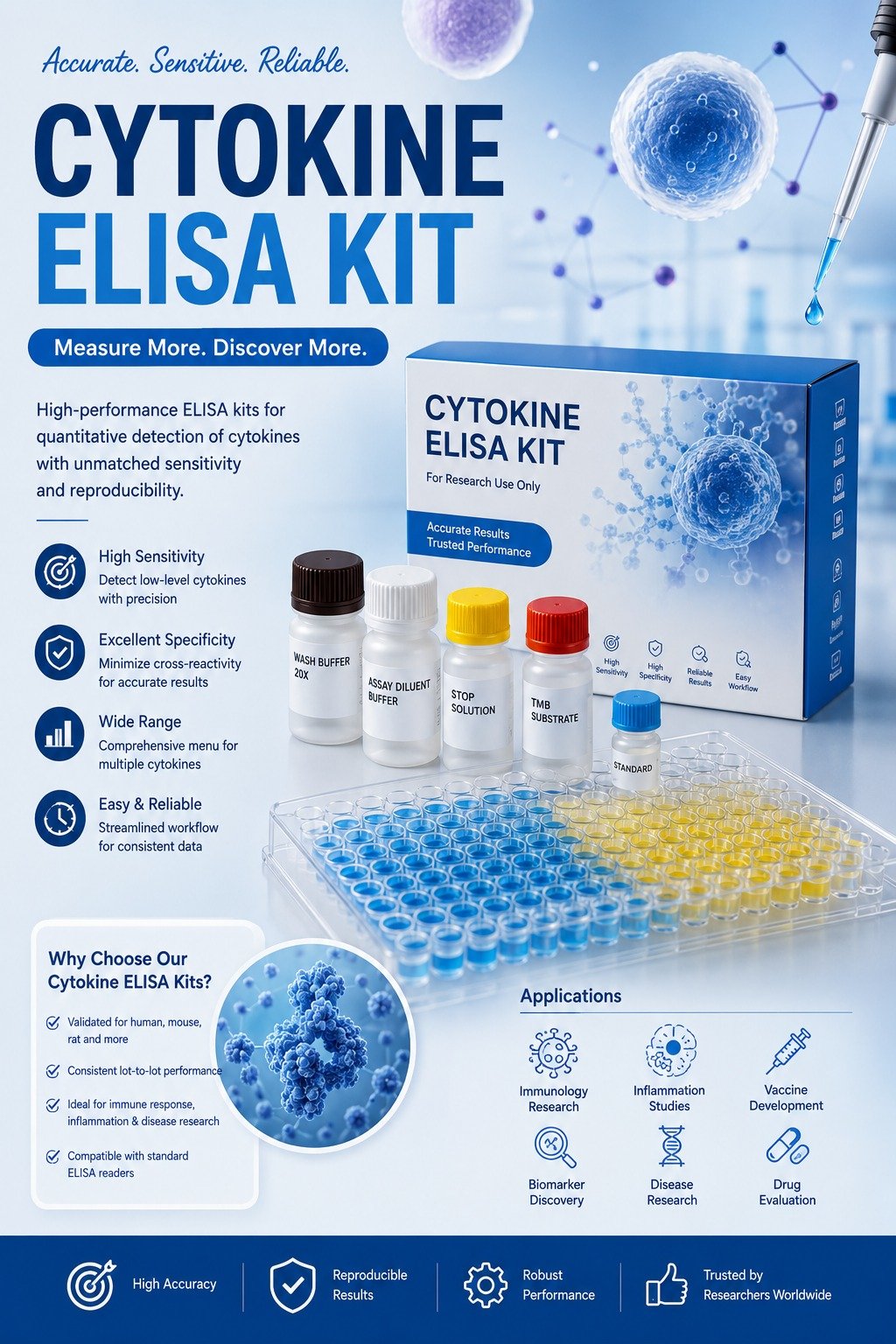

Cytokines are small protein molecules that are involved in regulation of immune response and inflammatory reactions in cells. In order to detect diseases, infections and disorders of the immune system at an early stage, one must use the detection method that would be very accurate and sensitive. This is when ELISA kits come into play.
This guide will provide you with information on ELISA kits and their role in cytokine detection.
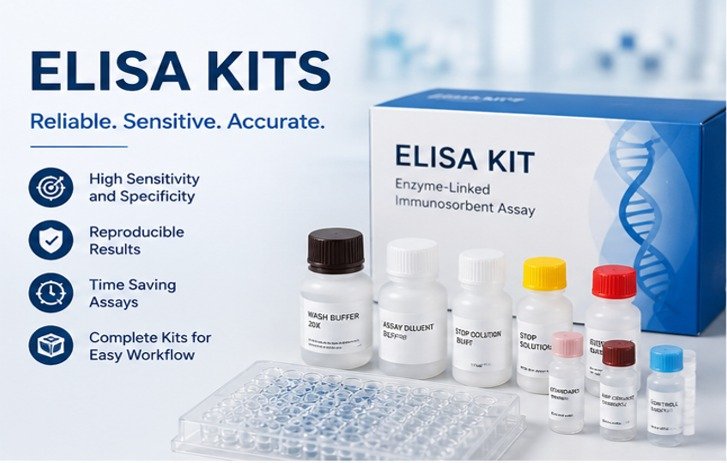
What Is an ELISA Kit?
Enzyme-linked Immunosorbent Assay or ELISA refers to the technique where specific proteins are detected and quantified using laboratory kits. ELISA kits can be used to measure the presence of specific proteins, including cytokines, in biological samples, such as serum, plasma, supernatant or cell lysate.
How Does It Work?
An ELISA kit refers to a prefabricated system assay utilized for identifying and quantifying specific proteins (for example, cytokines) in serum, plasma, cell culture supernatants, or tissue lysates.
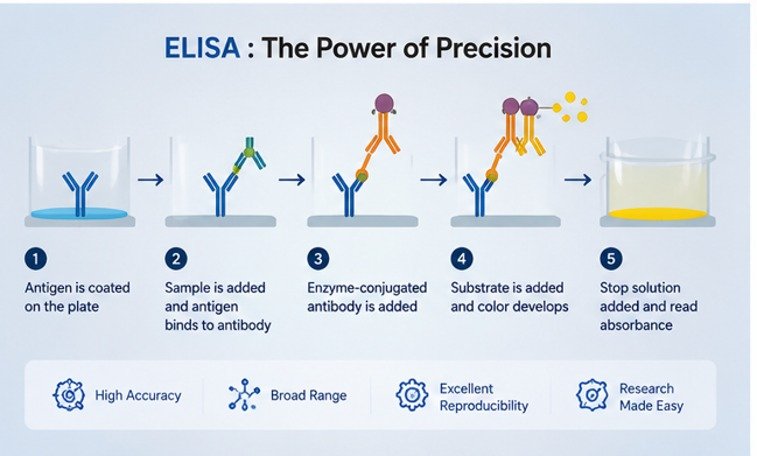
The process typically follows these steps:
1. Coating – Capture antibody, which is specific to the cytokine to be detected, is coated on the microtiter plate.
2. Sample Addition – the sample, which contains the cytokine to be detected is added and binds to the coated antigen.
3. Detection – Secondary antibodies conjugated with enzymes are added, which bind to the bound cytokine.
4. Substrate Reaction – Substrate is added and generates a colour reaction that is directly proportional to the concentration of the cytokine being detected.
5. Quantification – Colour intensity is determined and compared with the standard curve for determining the concentration.
Major Types of Cytokines
Cytokines are classified according to their biological functions. Each type plays a specific role in regulating immune responses, inflammation, and cell communication.
1. Interleukins (ILs)
Interleukins regulate communication between immune cells and help control inflammation and immune responses. Common examples include IL-1, IL-2, IL-6, IL-10, and IL-17.
2. Interferons (IFNs)
Interferons are produced in response to viral infections. They help prevent viral replication and strengthen the body's immune defense. Major types include IFN-α, IFN-β, and IFN-γ.
3. Tumor Necrosis Factors (TNFs)
Tumor Necrosis Factors, especially TNF-α, are key regulators of inflammation and play an important role in autoimmune diseases, cancer research, and immune regulation.
4. Chemokines
Chemokines guide immune cells to sites of infection or tissue damage through a process called chemotaxis. Examples include IL-8 (CXCL8), CCL2, and CCL5.
5. Colony Stimulating Factors (CSFs)
CSFs stimulate the growth and development of blood cells in the bone marrow. Common examples are G-CSF, GM-CSF, and M-CSF.
6. Growth Factors
Growth factors support cell growth, tissue repair, and blood vessel formation. Important examples include TGF-β, VEGF, PDGF, and EGF.
The Importance of Cytokines in Various Human Diseases
Aberrant production of cytokines has been observed in many diseases. Overexpression and deficiency of these factors can affect the proper function of the immune system.
Cancer
Tumor cells manipulate cytokine signaling in order to stimulate proliferation, angiogenesis, and immune escape mechanisms. Cytokine profiling can be used by scientists in studying the tumor microenvironment and responses to immunotherapies.
Autoimmune Diseases
Rheumatoid arthritis, lupus, psoriasis, and multiple sclerosis have been linked with high amounts of pro-inflammatory cytokines such as TNF-α and IL-6.
Infectious Diseases
Changes in the amounts of cytokines take place during infections with bacteria or viruses. Such studies help to investigate the disease course and host-pathogen interaction.
Neurological Disorders
Recent studies point out to the role of chronic neuroinflammation and abnormal cytokine expression in Alzheimer's disease, Parkinson's disease, and multiple sclerosis.
Cardiovascular Diseases
Inflammatory cytokines play a role in developing atherosclerosis, myocardial infarction, and other diseases of the cardiovascular system.
WHY Choose CellSeq?
CellSeq is an experienced provider of ELISA kits, providing scientists with a comprehensive selection of cytokine detection kits supported by high-quality standards. Regardless of whether you need to screen one cytokine or multiple, CellSeq has ELISA kits available to give your research publication-quality data in the field of immunology, oncology, and inflammation.
With CellSeq as your ELISA kit distributor, you can rest assured of receiving high-quality Elisa Kit, technical assistance, and constant product supply, which are vital components of any laboratory working with an experiment schedule.