
What Is Retinoblastoma?
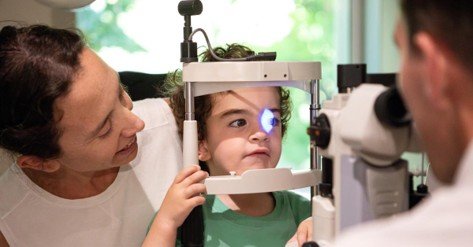
Retinoblastoma is the most common primary intraocular malignancy in children, typically affecting infants and young children under the age of five. It develops in the retina which is the light-sensitive tissue at the back of the eye and can occur in one eye (unilateral) or both eyes (bilateral). Although rare, it is one of the most curable childhood cancers when caught early.
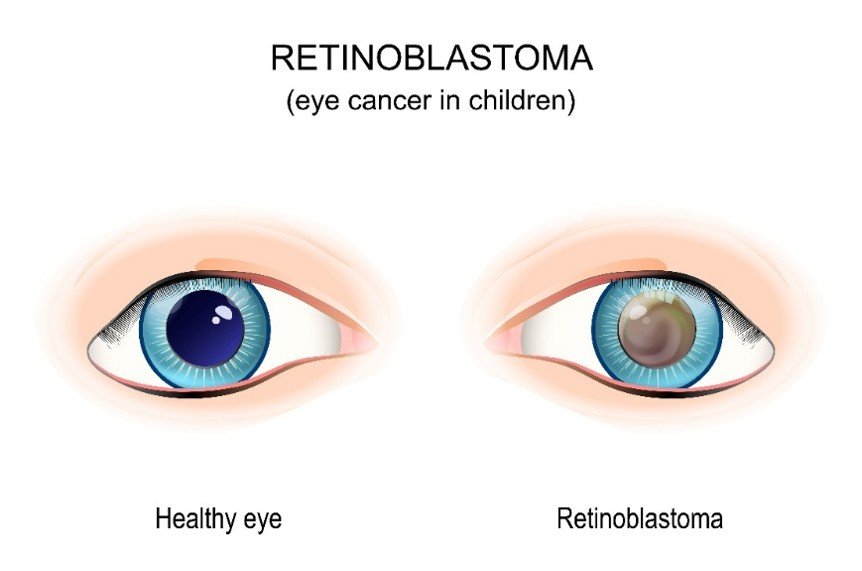
The disease often presents with leukocoria (a white pupillary reflex), strabismus (crossed eyes), reduced vision, redness, or swelling. Early diagnosis is critical not just for preserving vision but for preventing the tumour from spreading beyond the eye, where it becomes life-threatening.
How RB1 Mutations Trigger Retinoblastoma
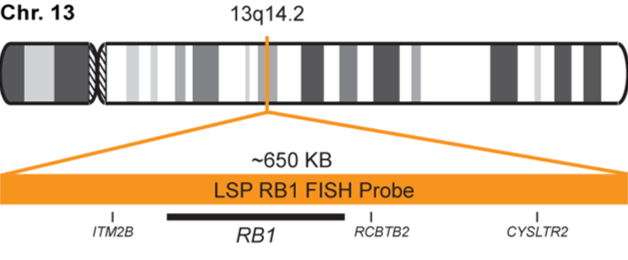
The RB1 gene is locatedon the long arm (q) of chromosome 13 at position 13q14.2. It was one of the first tumour suppressor genes ever discovered in human cancer research. It encodes the retinoblastoma protein (pRB) which is a molecular “brake” that controls the transition from the G1 to S phase of the cell cycle, preventing uncontrolled cell division.
When both copies of RB1 are inactivated, Alfred Knudson's famous “two-hit hypothesis” that brake fails, and retinal cells begin dividing uncontrollably, forming a tumour.
Two Paths to the Same Disease
- Germline mutations - inherited or arising early in embryonic development, present in every cell of the body. Usually cause bilateral or multifocal disease, and carry a higher lifetime risk of secondary cancers.
- Somatic mutations - arise only within retinal cells during development. Typically cause unilateral disease and are not passed on to future generations.
How NGS Is Transforming RB1 Detection
Traditional methods like Sanger sequencing, MLPA have served genetic diagnosis well, but often require multiple sequential tests and can miss certain mutation types.
Next-Generation Sequencing (NGS) changes that equation entirely, enabling simultaneous, high-sensitivity analysis across multiple genomic regions in a single workflow. NGS reliably detects:
- Single nucleotide variants (SNVs)
- Small insertions and deletions (Indels)
- Copy number variations (CNVs)
- Structural variants and large genomic rearrangements
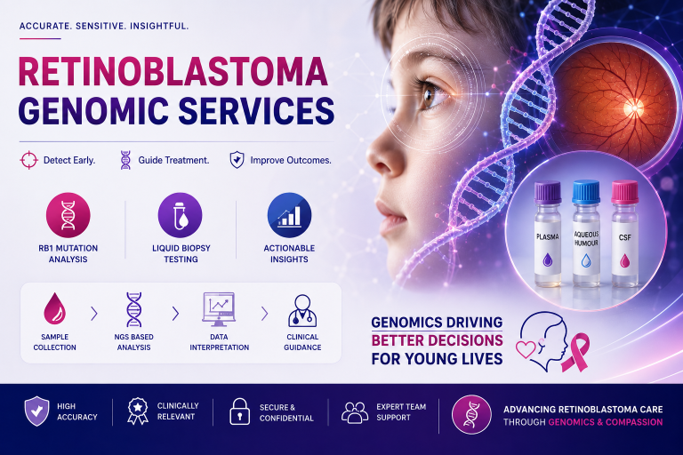
Crucially, NGS can identify both germline and somatic RB1 mutations from one workflow and has expanded beyond tissue into liquid biopsy, analysing tumour DNA from plasma, aqueous humour, and cerebrospinal fluid (CSF). This matters enormously in retinoblastoma, where direct tumour biopsy is generally avoided due to the risk of spreading cancer cells outside the eye.
LBSeq4Kids: A New Era of Liquid Biopsy
LBSeq4Kids is a next-generation liquid biopsy solution purpose-built for paediatric cancers, including retinoblastoma. Rather than relying on invasive tissue sampling, it uses advanced NGS to analyse circulating tumour-derived nucleic acids from minimally invasive samples sparing young patient’s unnecessary discomfort.
By removing the need for direct tumour biopsy, LBSeq4Kids offers a safer, more patient-friendly path to molecular characterization supporting disease monitoring, treatment response assessment, minimal residual disease (MRD) detection, and truly personalized therapeutic decisions.
Conclusion
Retinoblastoma is a genetically driven childhood cancer in which the RB1 tumour suppressor gene sits at the centre of disease initiation and progression. Advances in Next-Generation Sequencing have sharply improved detection accuracy, enabling earlier diagnosis and better-informed clinical decisions.
The rise of liquid biopsy has further reshaped the field, offering a minimally invasive alternative to tissue-based testing especially vital here, where biopsy is generally contraindicated. Tools like LBSeq4Kids bring NGS and liquid biopsy together to deliver comprehensive genomic profiling for precision diagnosis and personalized paediatric cancer care.