

Introduction
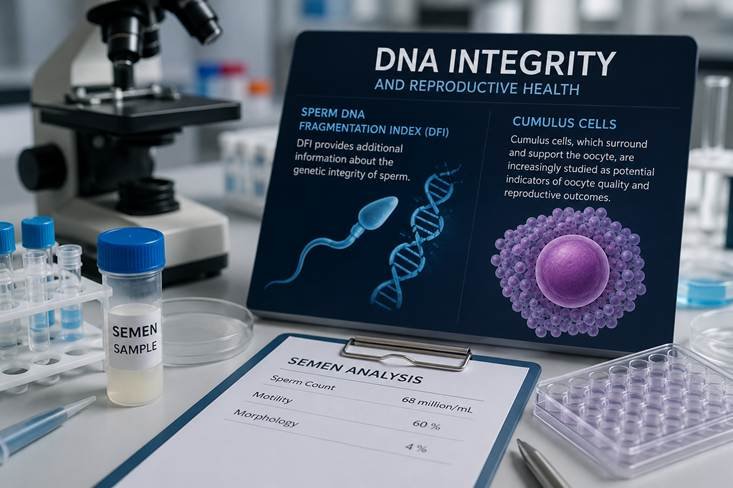
DNA integrity is an important factor in reproductive health. While conventional semen analysis evaluates sperm count, motility, and morphology, Sperm DNA Fragmentation Index (DFI) provides additional information about the genetic integrity of sperm. Cumulus cells, which surround and support the oocyte, are also increasingly studied as potential indicators of oocyte quality and reproductive outcomes.
What Is Sperm DFI?
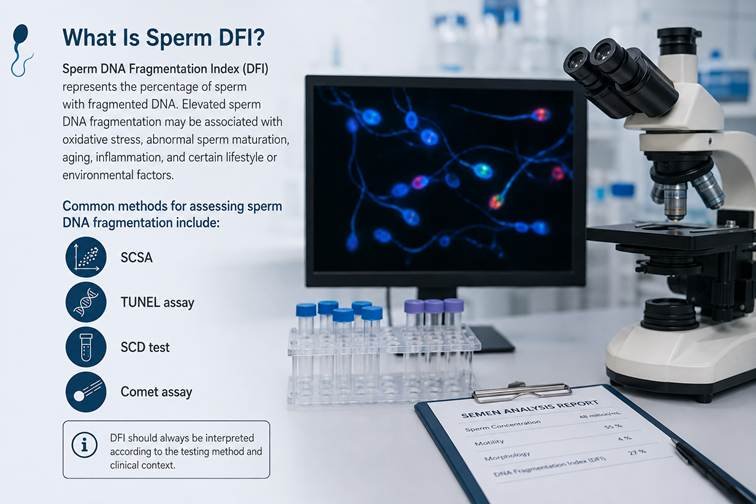
Sperm DNA Fragmentation Index (DFI) represents the percentage of sperm with fragmented DNA. Elevated sperm DNA fragmentation may be associated with oxidative stress, abnormal sperm maturation, aging, inflammation, and certain lifestyle or environmental factors. Common methods for assessing sperm DNA fragmentation include:
- SCSA
- TUNEL assay
- SCD test
- Comet assay
DFI should always be interpreted according to the testing method and clinical context.
DNA Damage in Cumulus Cells
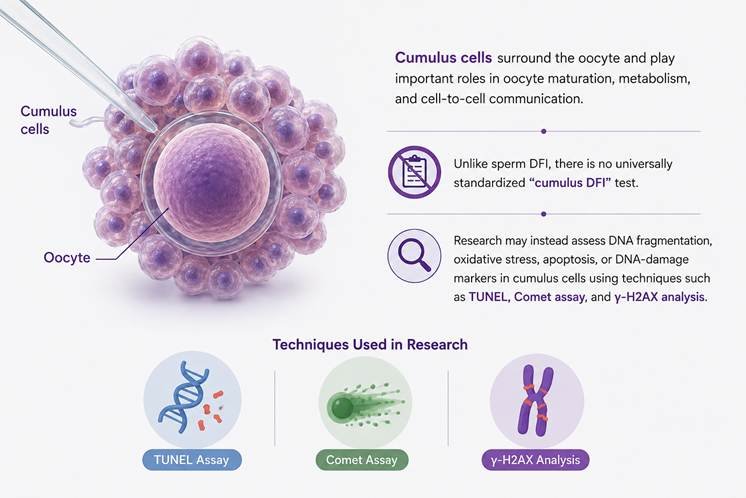
Cumulus cells surround the oocyte and play important roles in oocyte maturation, metabolism, and cell-to-cell communication. Unlike sperm DFI, there is no universally standardized “cumulus DFI” test. Research may instead assess DNA fragmentation, oxidative stress, apoptosis, or DNA-damage markers in cumulus cells using techniques such as TUNEL, Comet assay, and γ-H2AX analysis.
Why Are These Analyses Important?
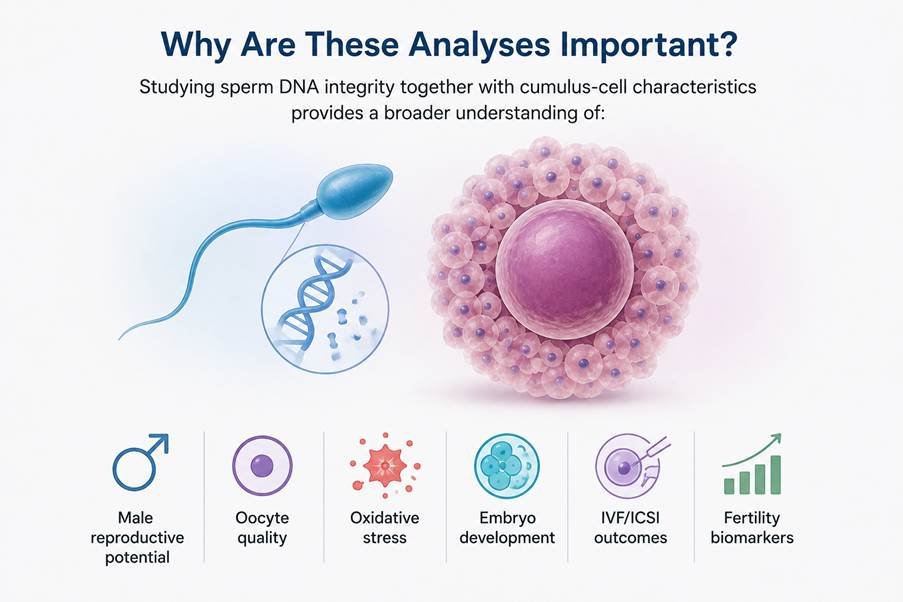
Studying sperm DNA integrity together with cumulus-cell characteristics can provide a broader understanding of:
- Male reproductive potential
- Oocyte quality
- Oxidative stress
- Embryo development
- IVF/ICSI outcomes
- Fertility biomarkers
Conclusion
Sperm DFI and cumulus-cell DNA damage are distinct but complementary areas of fertility research. Integrating molecular analysis of sperm, oocytes, and cumulus cells may help researchers better understand the biological factors influencing reproductive success.