

Introduction
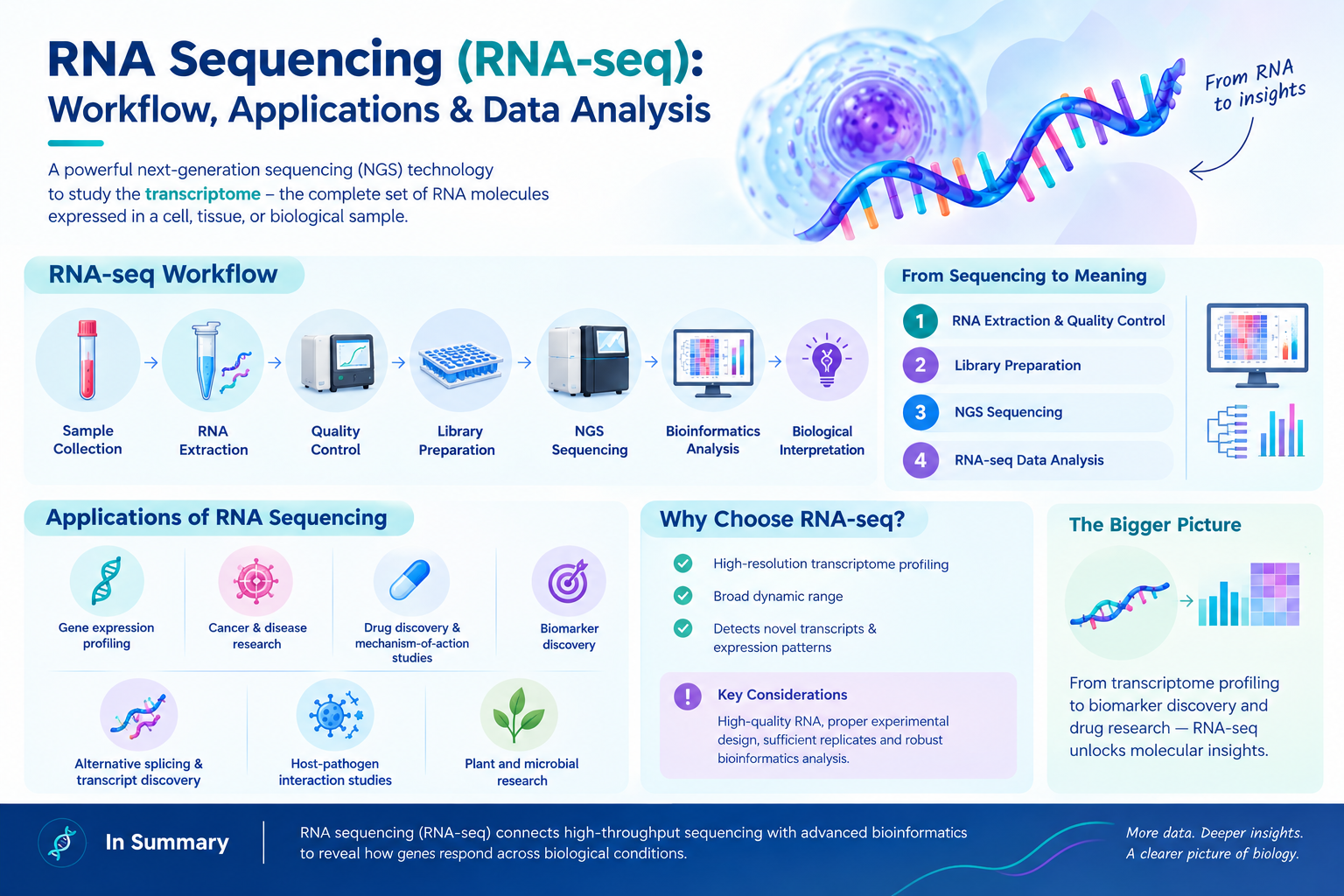
RNA sequencing (RNA-seq) is a powerful next-generation sequencing (NGS) technology used to study the transcriptome - the complete set of RNA molecules expressed in a cell, tissue, or biological sample. Unlike traditional gene expression methods, RNA-seq can provide comprehensive insights into gene expression, alternative splicing, novel transcripts, and disease-associated molecular changes.
RNA-seq Workflow
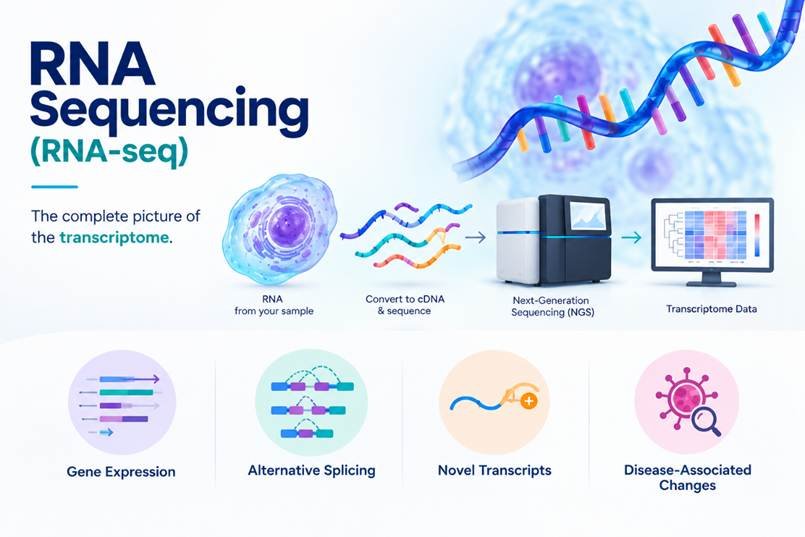
A typical RNA sequencing workflow includes:
Sample Collection → RNA Extraction → Quality Control → Library Preparation → NGS Sequencing → Bioinformatics Analysis → Biological Interpretation
1. RNA Extraction & Quality Control
High-quality RNA is essential for reliable sequencing. RNA is extracted and evaluated for concentration, purity, and integrity before library preparation.
2. Library Preparation
RNA is converted into sequencing-ready libraries through steps such as RNA selection/depletion, fragmentation, cDNA synthesis, adapter ligation, and amplification.
3. NGS Sequencing
Prepared libraries are sequenced using an NGS platform to generate millions of short sequencing reads representing the transcriptome.
4. RNA-seq Data Analysis
Bioinformatics analysis typically involves:
- Quality control & read trimming
- Read alignment or transcript quantification
- Gene expression analysis
- Differential gene expression
- Pathway & functional enrichment analysis
- Data visualization and interpretation
Applications of RNA Sequencing
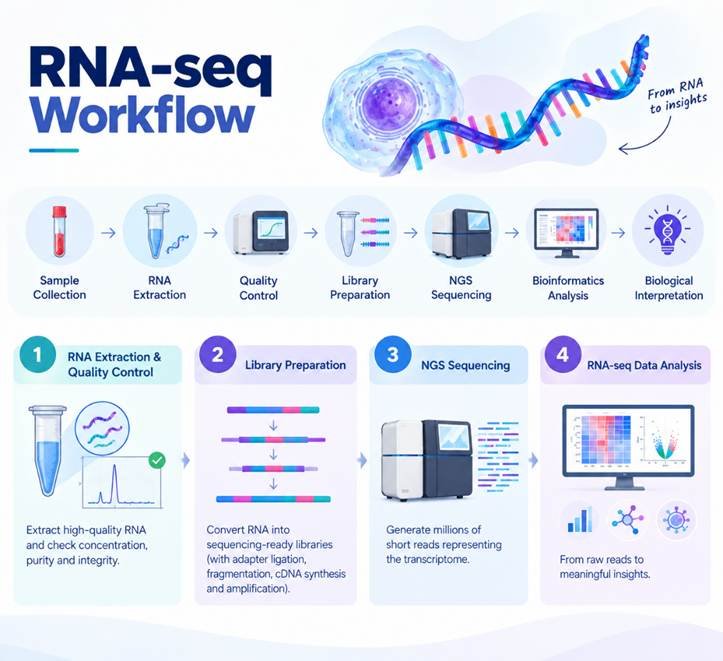
RNA-seq is widely used in:
🧬 Gene expression profiling
🧬 Cancer and disease research
💊 Drug discovery & mechanism-of-action studies
🔬 Biomarker discovery
🧬 Alternative splicing & transcript discovery
🦠 Host-pathogen interaction studies
🌱 Plant and microbial research
Why Choose RNA-seq?
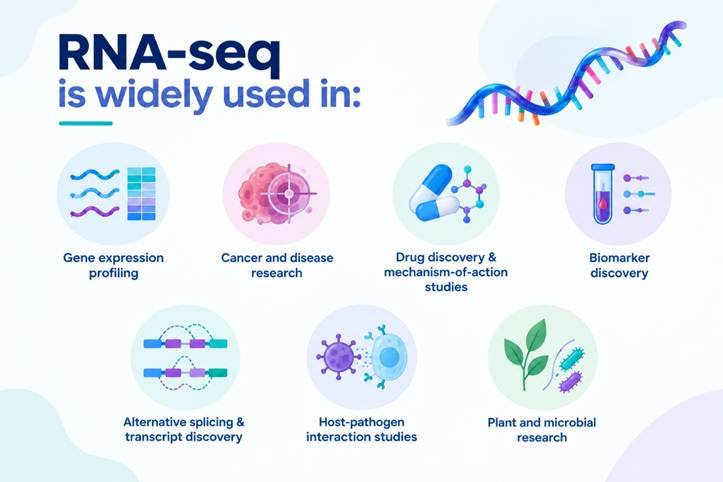
RNA-seq offers high-resolution transcriptome profiling, broad dynamic range, and the ability to detect transcripts and expression patterns that may be missed by targeted approaches. However, generating meaningful results requires high-quality RNA, appropriate experimental design, sufficient biological replicates, and robust bioinformatics analysis.
Conclusion
RNA sequencing (RNA-seq) connects high-throughput sequencing with advanced bioinformatics to reveal how genes respond across biological conditions. From transcriptome profiling to biomarker discovery and drug research, RNA-seq provides researchers with a powerful approach to uncover molecular insights.