

Introduction
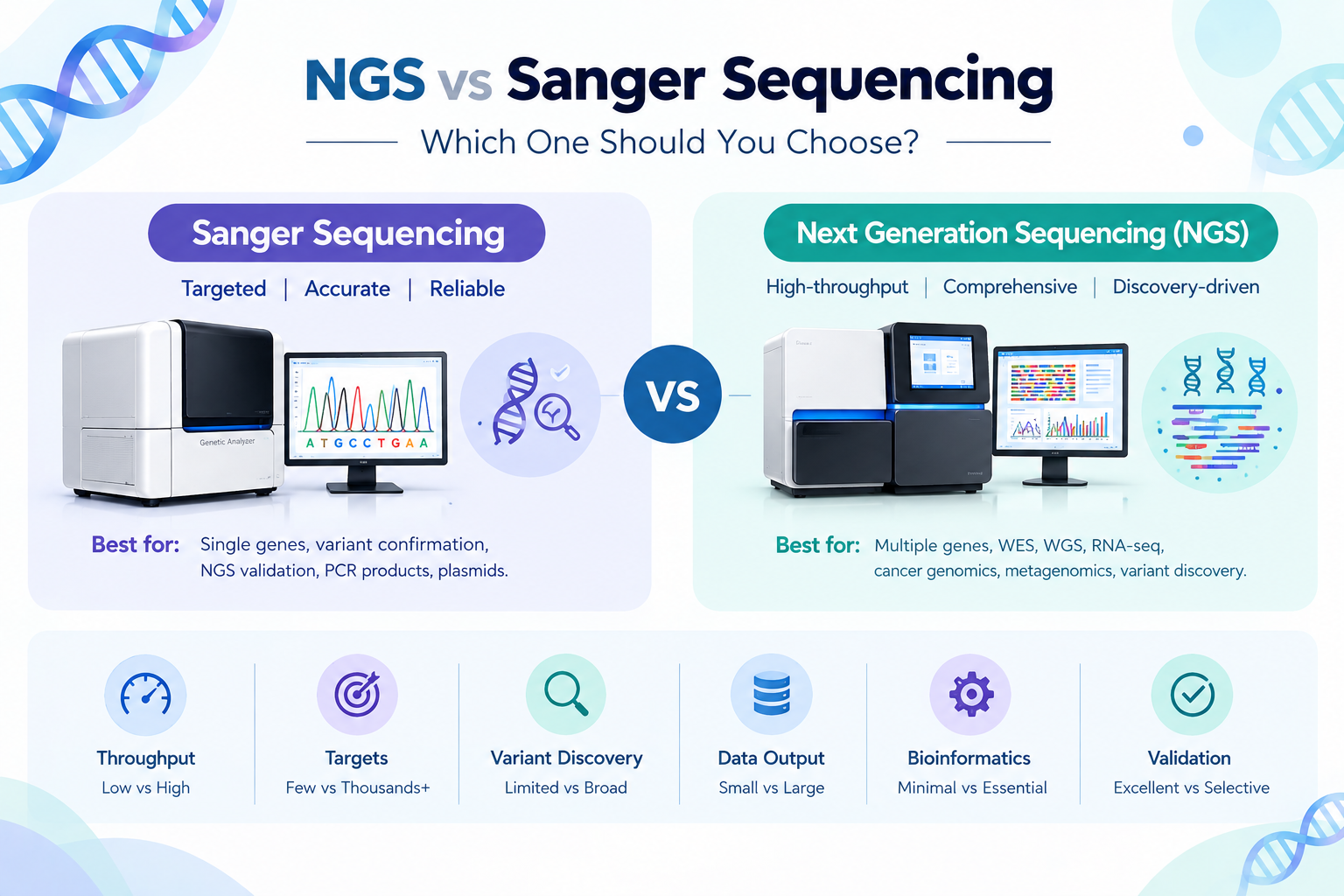
DNA sequencing is widely used in genetic research, disease studies, molecular diagnostics, and biotechnology. Two important sequencing approaches are Sanger sequencing and Next Generation Sequencing (NGS). Although both determine DNA sequences, they differ significantly in throughput, scale, applications, and data analysis requirements.
What is Sanger Sequencing?
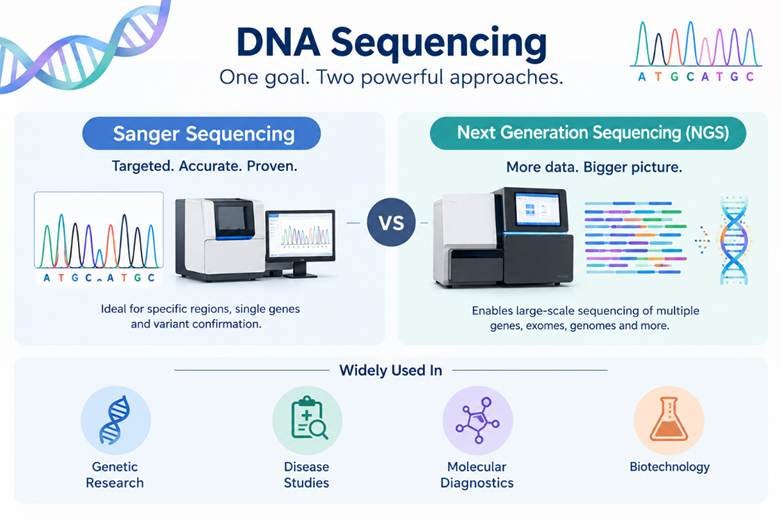
Sanger sequencing is a targeted sequencing method based on chain termination. It is ideal when you need to analyze a specific DNA fragment, gene, or previously identified variant.
Key applications:
- Single-gene or small-region sequencing
- Variant confirmation
- NGS variant validation
- PCR product sequencing
- Plasmid/construct verification
Sanger provides highly reliable sequence data but is not designed for large-scale sequencing.
What is Next Generation Sequencing (NGS)?
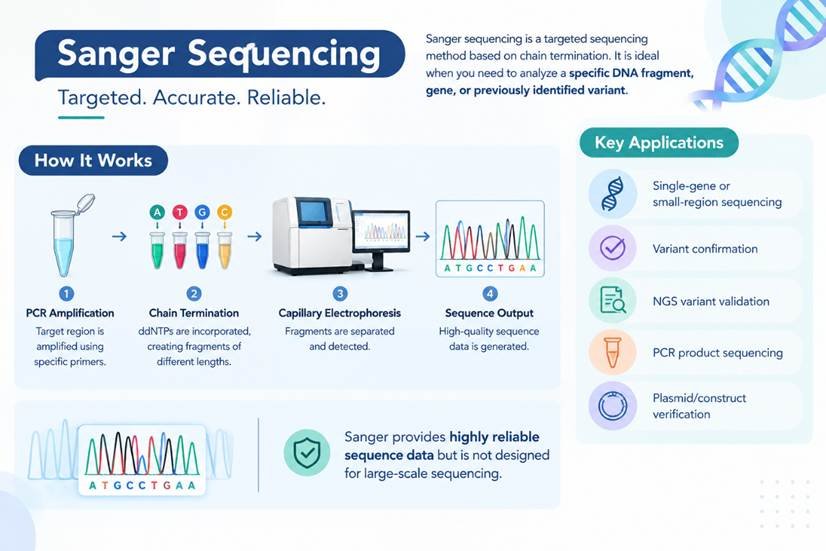
NGS uses massively parallel sequencing to analyze millions of DNA fragments simultaneously. This allows researchers to study multiple genes or large portions of the genome in a single experiment.
Key applications:
- Targeted gene panels
- Whole Exome Sequencing (WES)
- Whole Genome Sequencing (WGS)
- RNA sequencing
- Cancer genomics
- Metagenomics
- Rare and novel variant discovery
NGS vs Sanger: Key Differences
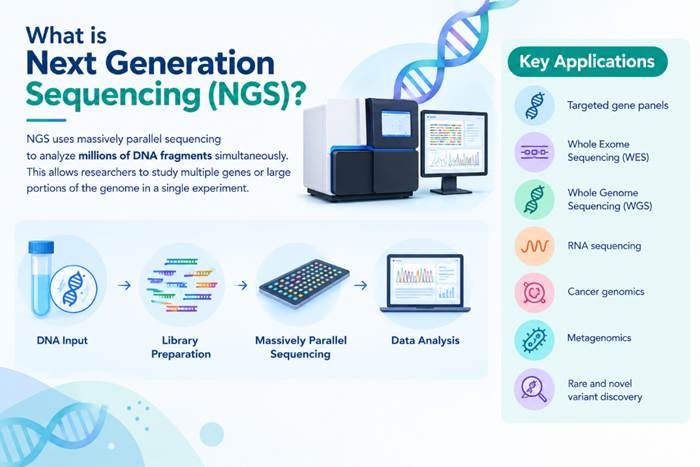
| Feature | Sanger Sequencing | NGS |
| Throughput | Low | High |
| Sequencing scale | Small regions | Multiple genes to entire genomes |
| Target number | Few | Hundreds to thousands+ |
| Variant discovery | Limited | Broad |
| Data output | Small | Large |
| Bioinformatics | Minimal | Essential |
| Best suited for | Targeted analysis | Large-scale genomic studies |
| Variant validation | Excellent | Often followed by orthogonal validation |
When Should You Choose Sanger?
Choose Sanger sequencing when you already know the region or variant you want to investigate and only a small number of targets need to be analyzed. For example, if you need to confirm a specific mutation in a gene, Sanger can be a practical and efficient option.
When Should You Choose NGS?
Choose NGS when your study involves multiple genes, many samples, broad genomic regions, or unknown variant discovery. For example:
Multiple disease-associated genes → Targeted NGS panel
Coding regions across thousands of genes → WES
Genome-wide analysis → WGS
Gene expression profiling → RNA-seq
Microbial community profiling → Metagenomic sequencing
Can NGS and Sanger Be Used Together?
Yes. They are often complementary technologies. A common workflow is:
NGS → Variant Discovery → Bioinformatics → Candidate Variant Identification → Sanger Validation
NGS provides the scale and discovery power, while Sanger can be used for targeted confirmation of selected variants.
Which Sequencing Method Is Right for You?
The choice depends on your research objective, number of targets, sample size, required sensitivity, and budget.
Sanger = Targeted, Focused and Low-throughput
NGS = High-throughput, Multiplexed and Discovery-oriented
Therefore, Sanger is ideal for focused sequencing questions, while NGS is more suitable for comprehensive genomic investigations.
How CellSeq Solutions Can Help
CellSeq Solutions LLP provides end-to-end genomics services including:
- Next Generation Sequencing (NGS)
- Whole Exome Sequencing (WES)
- Whole Genome Sequencing (WGS)
- Transcriptome Sequencing
- Metagenome Sequencing
- DNA/RNA Extraction
- Bioinformatics & NGS Data Analysis
Choosing the right sequencing strategy at the beginning can help optimize data quality, cost, turnaround time, and biological insights.