

Introduction
Genetic testing doesn’t always require a blood sample.
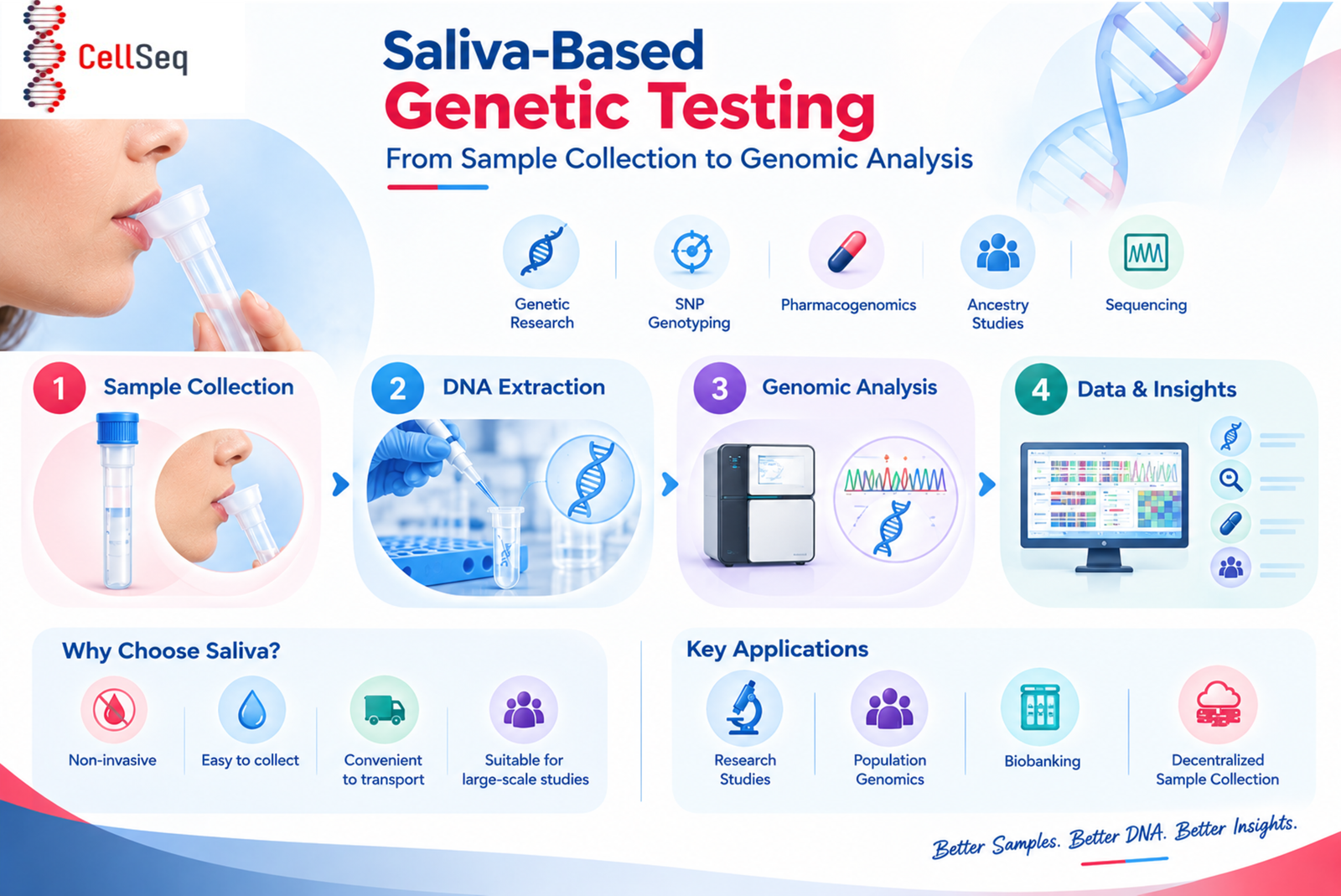
Saliva is a convenient, non-invasive source of human DNA and can be used for a range of genomic applications, including genetic research, SNP genotyping, pharmacogenomics, ancestry studies, and sequencing.
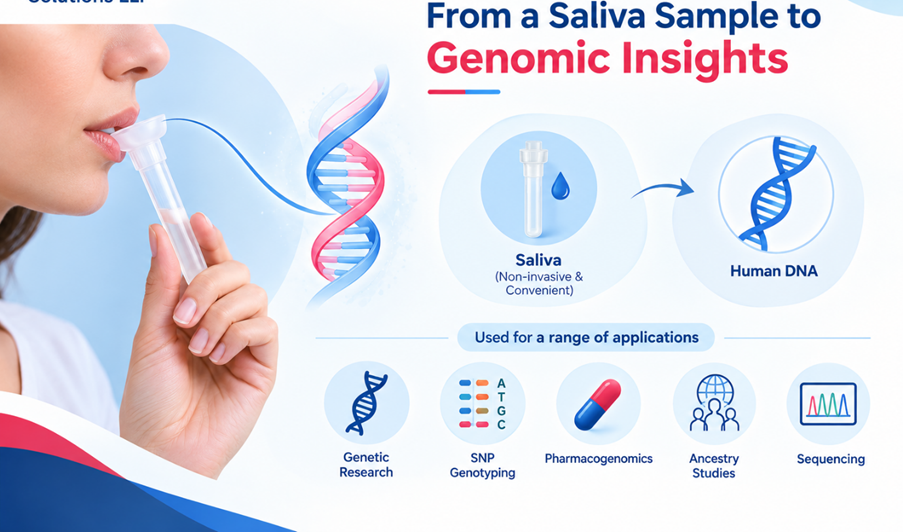
But how does saliva go from a simple sample to meaningful genomic data?
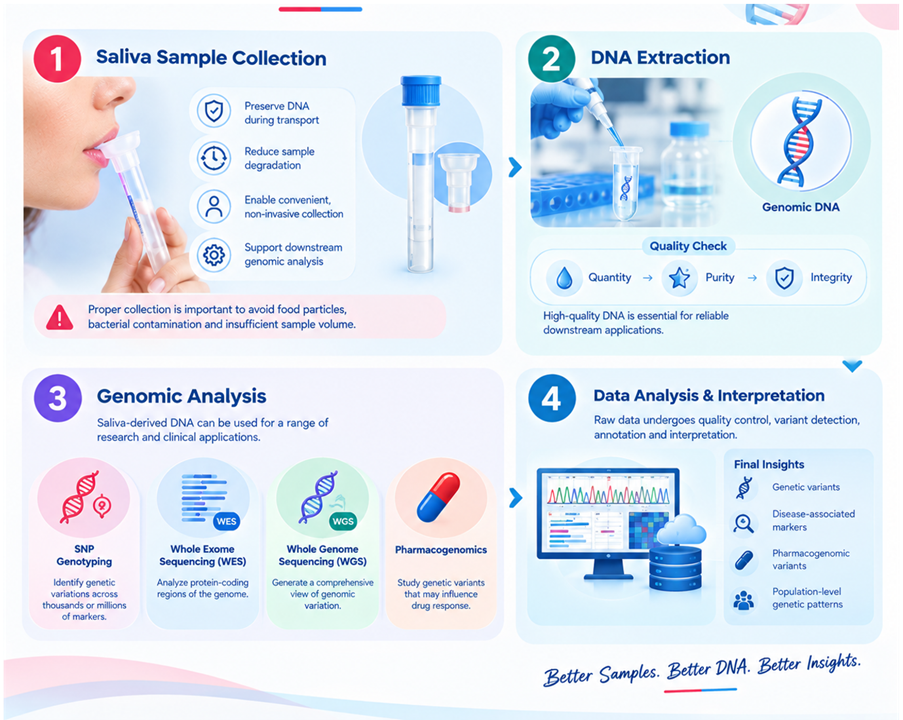
🧬 Step 1: Saliva Sample Collection
The process begins with collecting saliva using a specialized saliva collection and stabilization device. Proper collection is important because factors such as food particles, bacterial contamination, and insufficient sample volume can affect DNA recovery and quality.
A good collection system helps:
- Preserve DNA during transport
- Reduce sample degradation
- Enable convenient, non-invasive collection
- Support downstream genomic analysis
🧪 Step 2: DNA Extraction
Once the sample reaches the laboratory, genomic DNA is extracted from saliva. The extracted DNA is then evaluated for:
Quantity → Purity → Integrity
High-quality DNA is essential for reliable downstream applications.
🔬 Step 3: Genomic Analysis
Depending on the research objective, saliva-derived DNA can be used for different genomic workflows:
SNP Genotyping
Identify genetic variations across thousands or millions of markers.
Whole Exome Sequencing (WES)
Analyze protein-coding regions of the genome.
Whole Genome Sequencing (WGS)
Generate a comprehensive view of genomic variation.
Pharmacogenomics
Study genetic variants that may influence drug response.
📊 Step 4: Data Analysis & Interpretation
After sequencing or genotyping, raw data undergoes quality control, variant detection, annotation, and interpretation.
The final output can provide insights into:
🧬 Genetic variants
🔎 Disease-associated markers
💊 Pharmacogenomic variants
📈 Population-level genetic patterns
Why Choose Saliva for Genetic Testing?
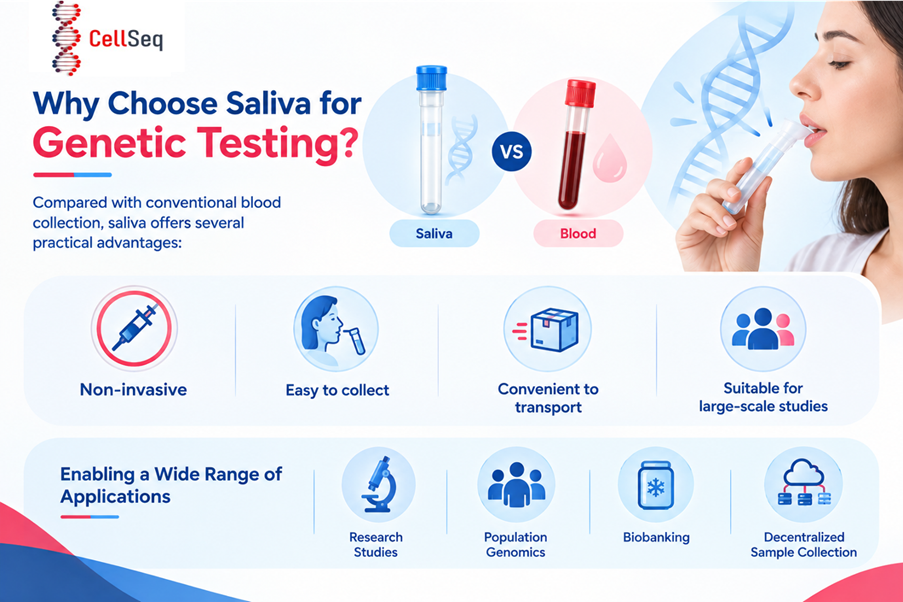
Compared with conventional blood collection, saliva offers several practical advantages:
Non-invasive • Easy to collect • Convenient to transport • Suitable for large-scale studies
This makes saliva particularly useful for research studies, population genomics, biobanking, and decentralized sample collection.
The Takeaway
A saliva sample can be the starting point for powerful genomic insights.
From sample collection and DNA extraction to sequencing, genotyping, and bioinformatics, every step influences the quality of the final result. At CellSeq Solutions LLP, we support genomic workflows involving saliva sample collection, DNA extraction, NGS, WES, WGS, SNP genotyping, and downstream genomic analysis.