
Introduction
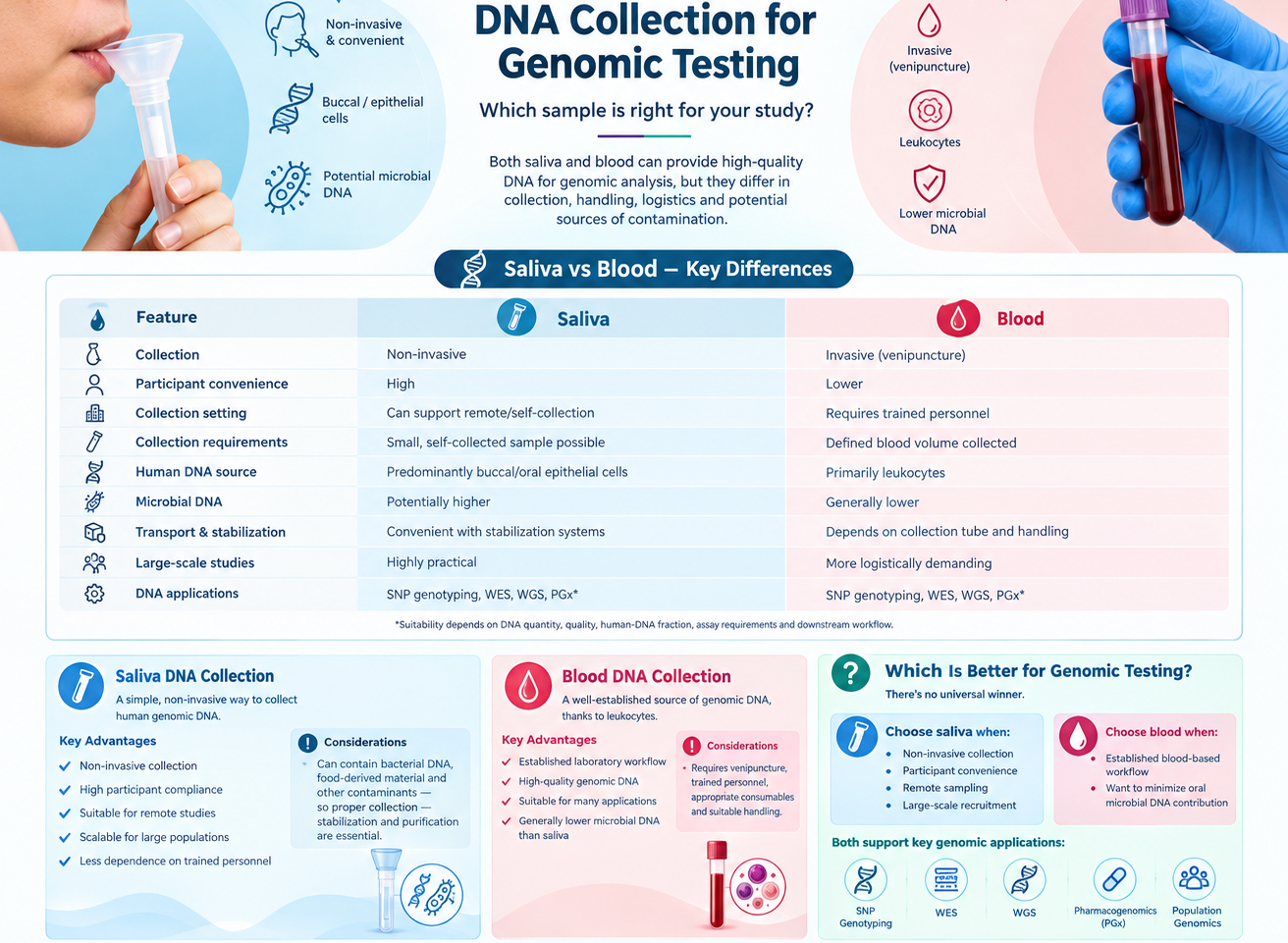
Choosing the right biological sample is the first step toward reliable genomic testing. For many genomic applications, blood and saliva are commonly used sources of human DNA. Both can provide DNA suitable for downstream analysis, but they differ in collection, handling, logistics, and potential sources of contamination.
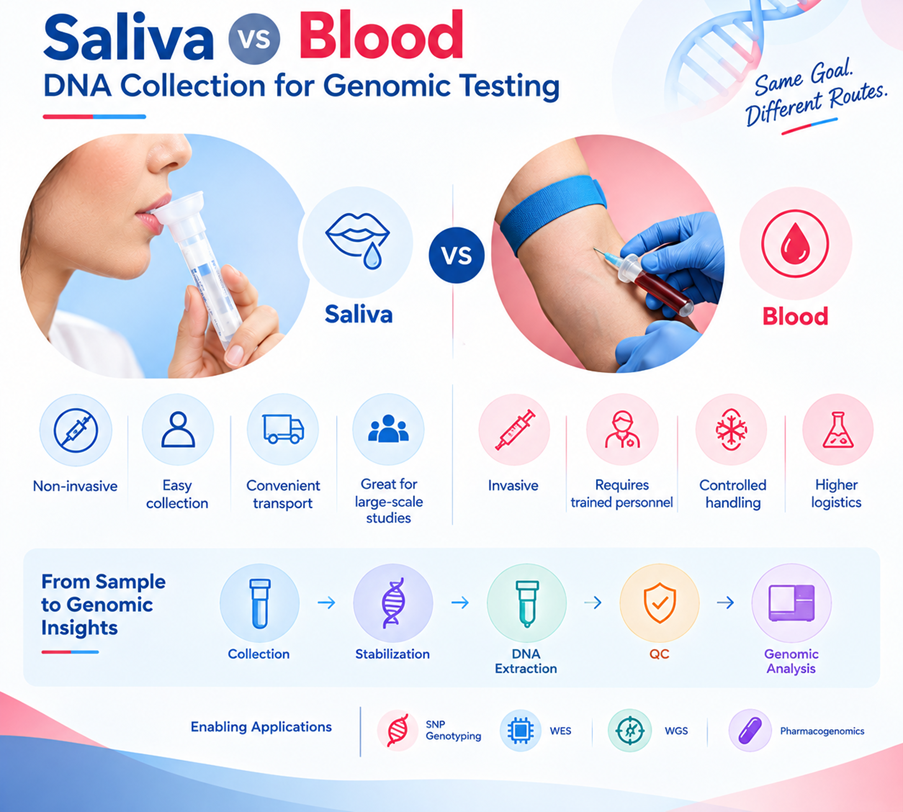
So, saliva or blood - which sample should you choose?
The answer depends on your study design, sample population, genomic application, and logistics.
🧬 Saliva vs Blood DNA Collection
| Feature | Saliva | Blood |
| Collection | Non-invasive | Invasive |
| Collection process | Simple & convenient | Requires trained collection |
| Sample volume | Easy to collect | Controlled blood volume |
| Transport | Convenient with stabilization systems | Requires appropriate handling |
| Participant comfort | High | Lower |
| Large-scale studies | Highly practical | More logistically demanding |
| DNA source | Mainly epithelial cells | Primarily leukocytes |
| Potential contaminants | Food, microbial DNA | Hemoglobin and other blood components |
🧪 Saliva DNA Collection
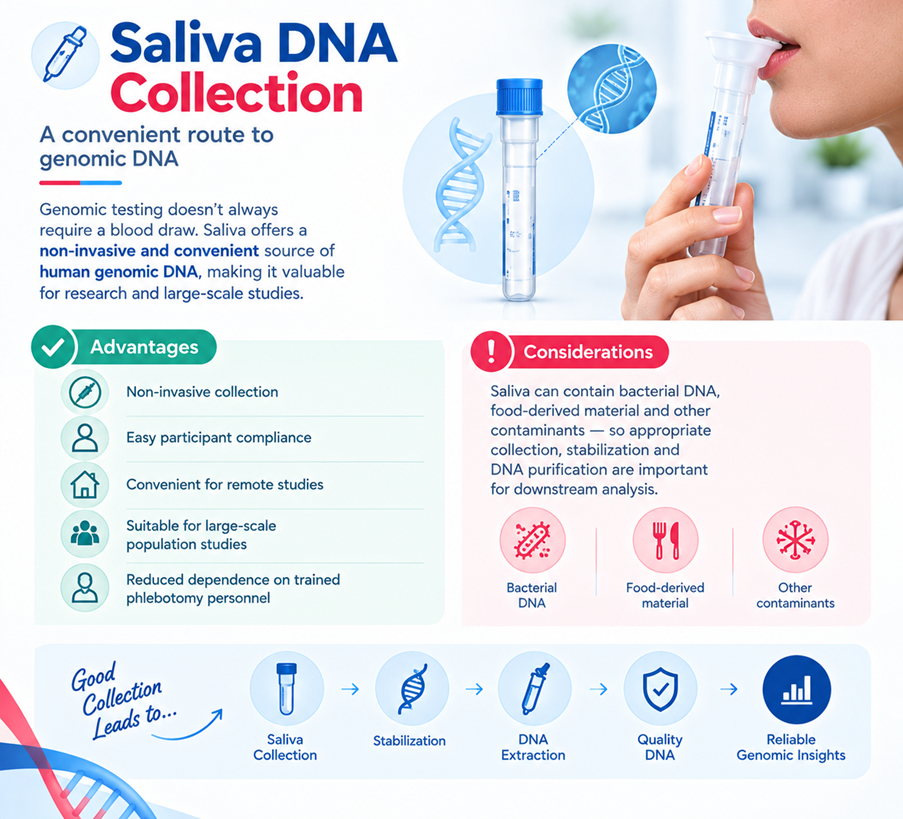
Saliva provides a non-invasive method of collecting human genomic DNA. With appropriate collection and stabilization systems, saliva samples can be collected outside conventional laboratory settings and transported for downstream processing.
Advantages
✔ non-invasive collection
✔ Easy participant compliance
✔ Convenient for remote studies
✔ Suitable for large-scale population studies
✔ Reduced dependence on trained phlebotomy personnel
Considerations
Saliva can contain bacterial DNA, food-derived material and other contaminants, so appropriate collection, stabilization and DNA purification are important.
🩸 Blood DNA Collection
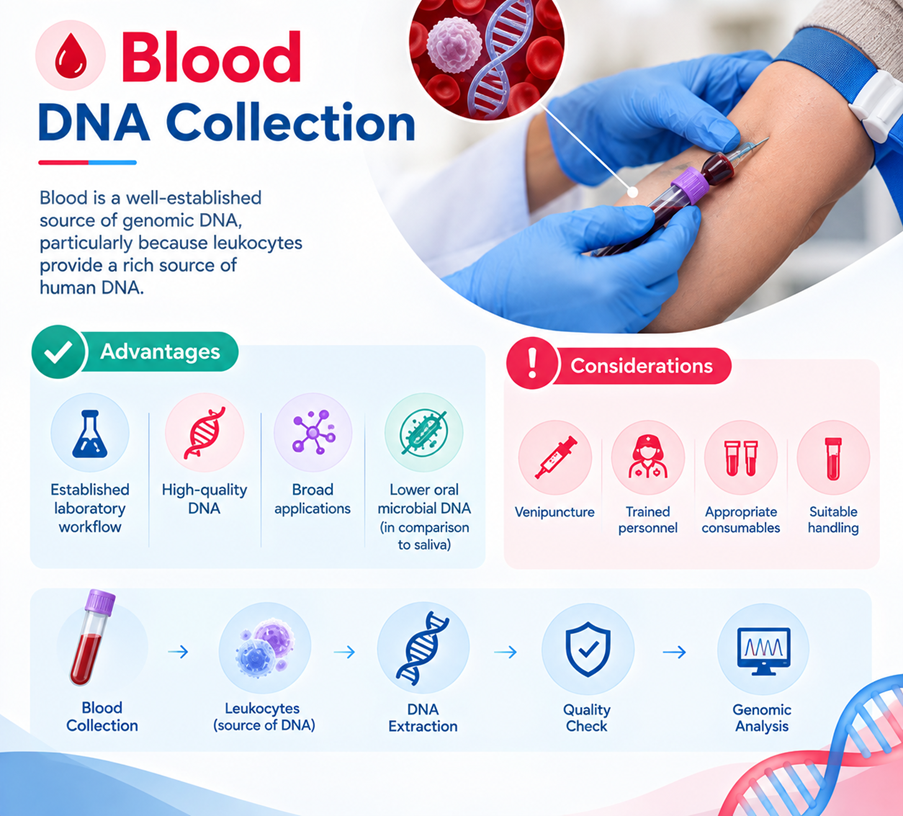
Blood is a well-established source of genomic DNA, particularly because leukocytes provide a rich source of human DNA.
Advantages
✔ Established laboratory workflow
✔ High-quality genomic DNA can be obtained
✔ Suitable for many molecular and genomic applications
✔ Lower contribution of oral microbial DNA compared with saliva
Considerations
Blood collection requires venipuncture, trained personnel, appropriate consumables and suitable sample handling.
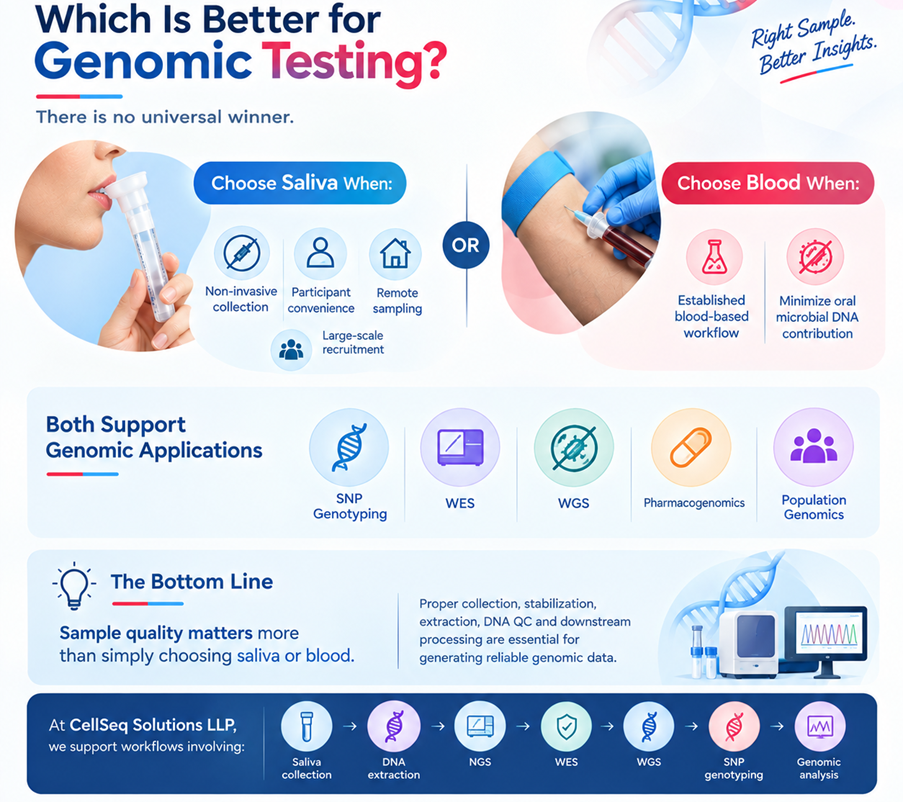
🔬 Which Is Better for Genomic Testing?
There is no universal winner.
Choose saliva when:
Your study prioritizes non-invasive collection, participant convenience, remote sampling, or large-scale recruitment.
Choose blood when:
You require an established blood-based workflow and want to minimize the contribution of oral microbial DNA to the extracted nucleic-acid preparation.
Both sample types can support genomic applications such as:
🧬 SNP Genotyping
🔬 Whole Exome Sequencing (WES)
🧬 Whole Genome Sequencing (WGS)
💊 Pharmacogenomics
📊 Population Genomics
The Bottom Line
Sample quality matters more than simply choosing saliva or blood.
Proper collection, stabilization, extraction, DNA QC and downstream processing are essential for generating reliable genomic data. At CellSeq Solutions LLP, we support workflows involving saliva sample collection, DNA extraction, NGS, WES, WGS, SNP genotyping and genomic analysis.