

Introduction
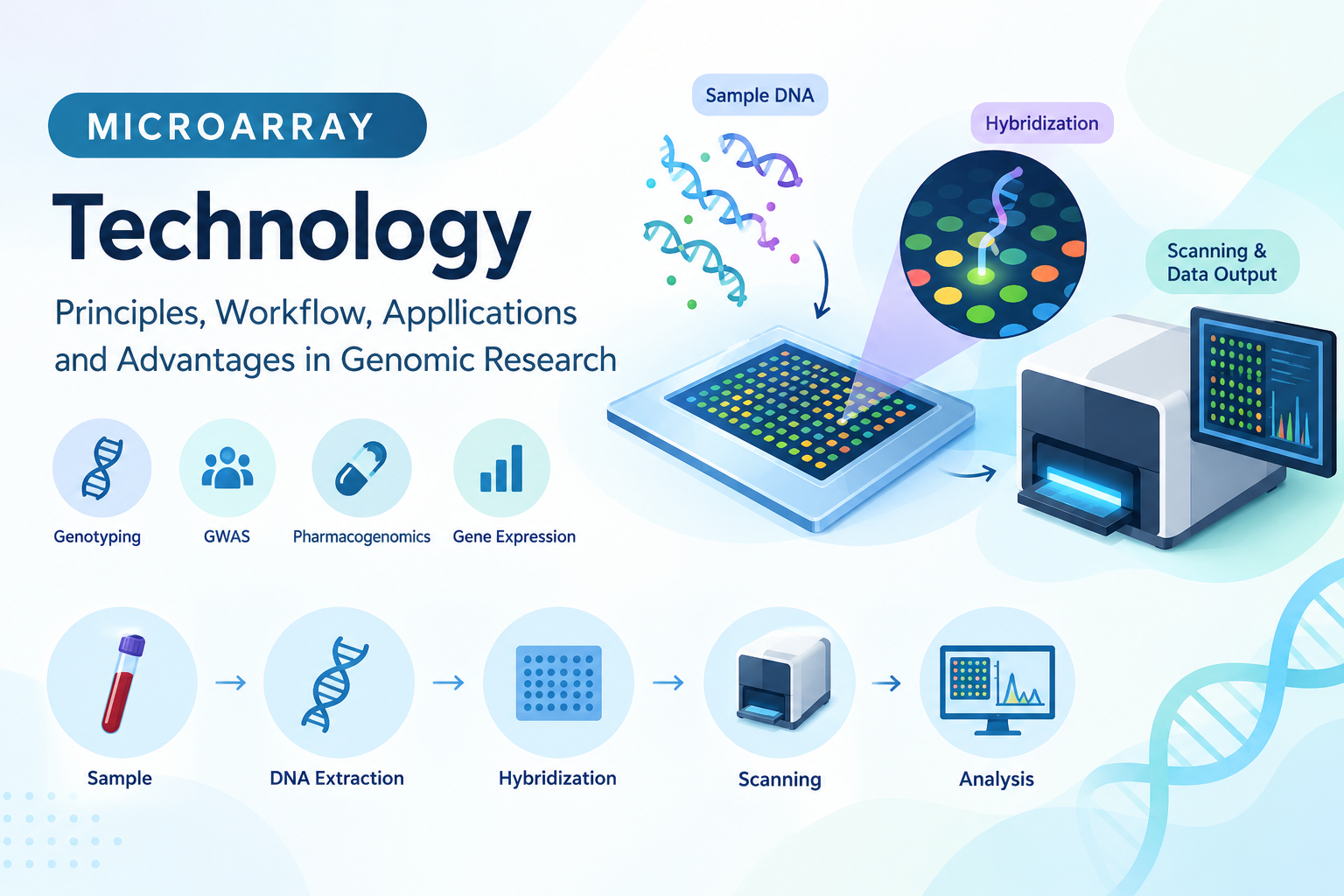
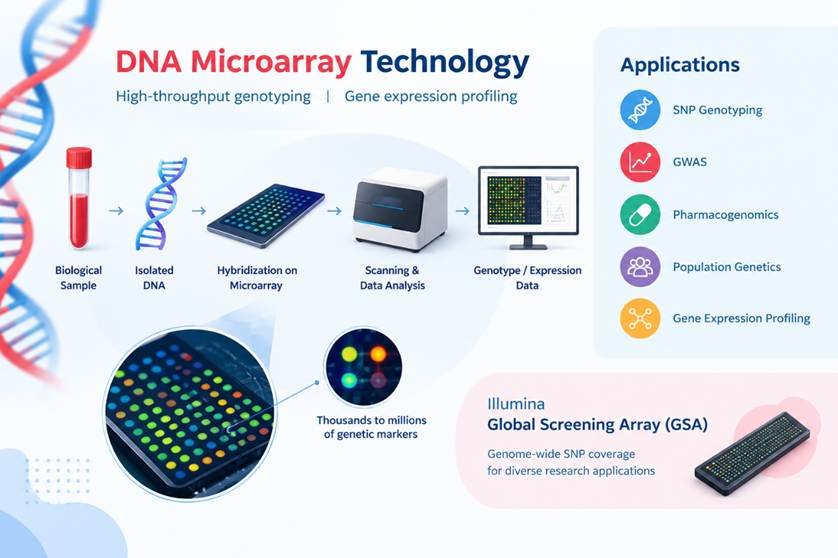
Modern genomics has transformed the way researchers study genetic variation, disease susceptibility and biological traits. Among the technologies that have contributed significantly to large-scale genomic analysis, DNA microarrays remain an important tool for high-throughput genotyping and gene expression studies. A microarray enables researchers to analyze thousands to millions of genetic markers simultaneously from a single biological sample. Depending on the array design, microarray technology can be used for applications such as SNP genotyping, genome-wide association studies (GWAS), pharmacogenomics, population genetics and gene expression profiling. One widely used example is the Illumina Global Screening Array (GSA), which provides genome-wide SNP coverage and can support a range of genetic research applications.
What Is a Microarray?
A DNA microarray is a laboratory-based technology containing a large number of immobilized DNA probes arranged on a solid surface, such as a glass slide or specialized array substrate. Each probe is designed to recognize a specific DNA sequence or genetic variant. When DNA from a biological sample is processed and hybridized to the array, the interaction between the sample DNA and the probes generates signals that can be measured and analyzed. In SNP genotyping arrays, these signals are used to determine the genotype of an individual at thousands or millions of predefined genomic positions.
How Does Microarray Technology Work?
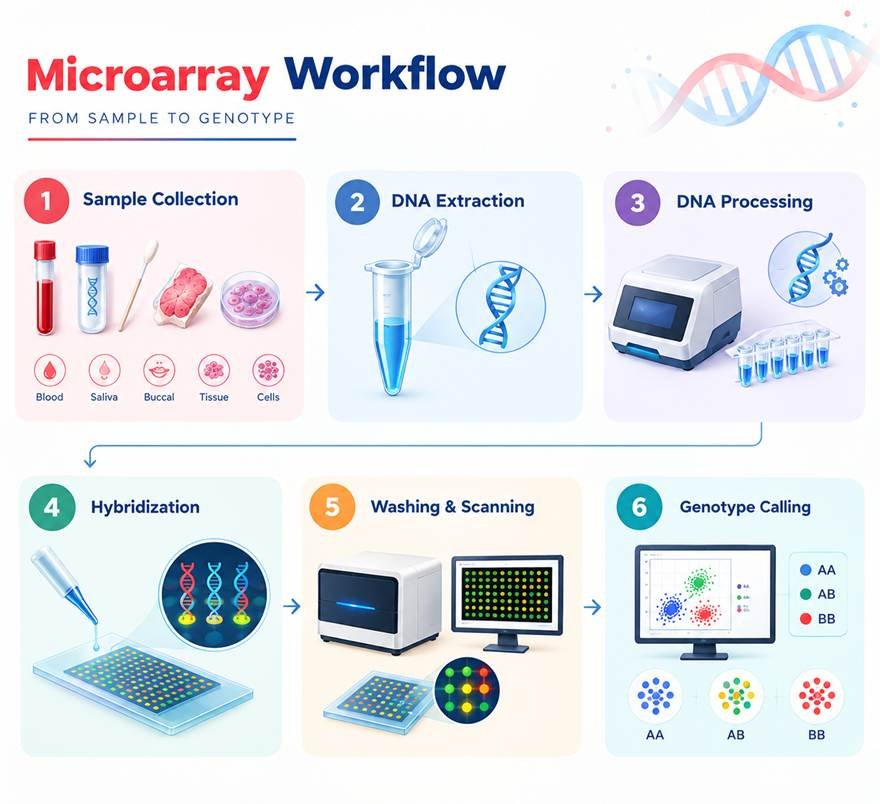
A typical SNP microarray workflow involves several major steps.
1. Sample Collection
The process begins with the collection of a biological sample such as:
- Blood
- Saliva
- Buccal sample
- Tissue
- Cell samples
The choice of sample depends on the research application and DNA requirements.
2. DNA Extraction
High-quality genomic DNA is extracted from the sample. DNA quality and quantity are important because poor-quality DNA can affect downstream genotyping performance. Common quality parameters include:
- DNA concentration
- Purity
- DNA integrity
3. DNA Processing
The extracted DNA undergoes array-specific processing steps according to the manufacturer's protocol. These steps prepare the DNA for efficient interaction with the probes present on the array.
4. Hybridization
Processed DNA is introduced onto the microarray. DNA fragments hybridize with complementary probes located at specific positions on the array.
5. Washing and Scanning
After hybridization, the array is processed to remove non-specific binding. The array is then scanned using an appropriate microarray scanner. The scanner detects fluorescence or other signals generated from the hybridization process.
6. Genotype Calling
Raw intensity data are converted into genotype information using specialized software and reference cluster files. For SNP genotyping, variants are generally classified into three genotype clusters:
AA | AB | BB
The resulting data can then be subjected to quality control and downstream analysis.
Depending on the research objective, additional analyses may include:
- Principal Component Analysis (PCA)
- Population stratification
- GWAS
- Linkage disequilibrium analysis
- Polygenic risk analysis
- Pharmacogenomic interpretation
- Genetic ancestry analysis
What Is SNP Genotyping Using Microarrays?
One of the major applications of microarray technology is SNP genotyping.
A Single Nucleotide Polymorphism (SNP) represents a variation at a single nucleotide position in the genome.
For example:
Reference: A
Alternative: G
A genotyping array can determine whether an individual carries:
- AA
- AG
- GG
for a particular SNP.
By analyzing hundreds of thousands or millions of SNPs simultaneously, researchers can obtain a genome-wide genetic profile.
Illumina Global Screening Array (GSA)
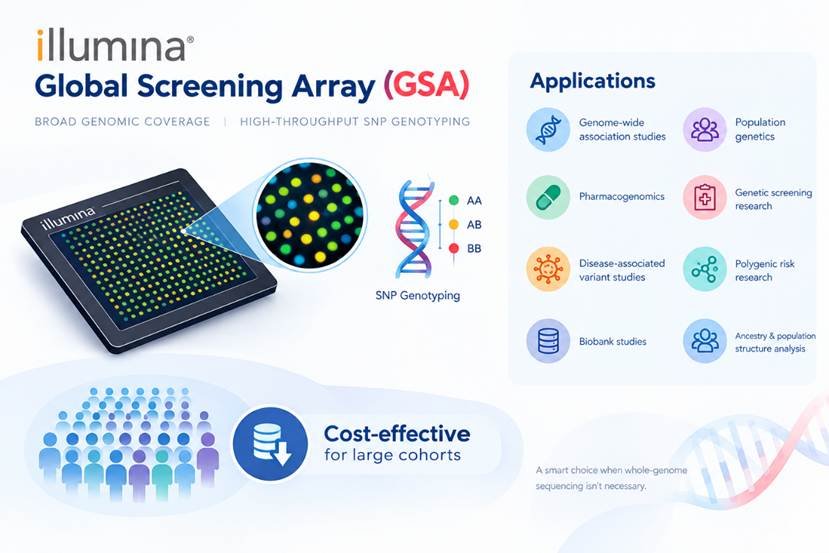
The Illumina Global Screening Array (GSA) is a widely used SNP genotyping platform designed for broad genomic coverage.
It can support applications including:
- Genome-wide association studies
- Population genetics
- Pharmacogenomics
- Genetic screening research
- Disease-associated variant studies
- Polygenic risk research
- Biobank studies
- Ancestry and population structure analysis
The array can provide a cost-effective approach for analyzing large cohorts where whole-genome sequencing may not be necessary.
Microarray vs Sequencing
Microarrays and sequencing technologies answer different types of genomic questions.
| Feature | Microarray | NGS |
| Primary approach | Probe-based detection | Sequence-based |
| Variant detection | Mainly predefined variants | Known and novel variants |
| Number of markers | Hundreds of thousands to millions | Depends on sequencing strategy |
| Novel variant discovery | Limited | Possible |
| Cost per sample | Generally lower for large cohorts | Application dependent |
| Large cohort studies | Highly suitable | Suitable but often more resource-intensive |
| GWAS | Widely used | Also, possible |
| Whole genome characterization | Limited | WGS provides broader characterization |
Therefore, the choice between microarray and sequencing should depend on the research question, required genomic resolution, cohort size and budget.
Major Applications of Microarray Technology
1. Genome-Wide Association Studies
Microarrays have played an important role in GWAS by enabling researchers to genotype large numbers of individuals across hundreds of thousands of genomic markers.
Researchers can then investigate associations between genetic variants and traits or diseases.
2. Population Genetics
Microarray datasets can be used to investigate:
- Genetic diversity
- Population structure
- Genetic relationships
- Ancestry
- Population stratification
Large cohorts can be analyzed efficiently, making arrays useful for population-scale research.
3. Pharmacogenomics
Genetic variation can influence how individuals respond to certain drugs. Microarray-based genotyping can identify predefined variants associated with drug metabolism, transport or response and can therefore contribute to pharmacogenomic research.
4. Disease Genetics
Microarray genotyping can help researchers investigate genetic variants associated with complex diseases and phenotypes. When combined with appropriate statistical analysis, genome-wide SNP data can be used to identify genetic associations.
5. Polygenic Risk Research
Many complex traits are influenced by multiple genetic variants. Microarray-generated SNP data can contribute to the calculation and evaluation of polygenic risk scores (PRS) when appropriate variants and validated models are available.
6. Biobank Studies
Large biobanks often contain thousands or millions of samples. Microarray platforms can provide a scalable approach for genotyping large cohorts, making them useful for population-scale genomic research.
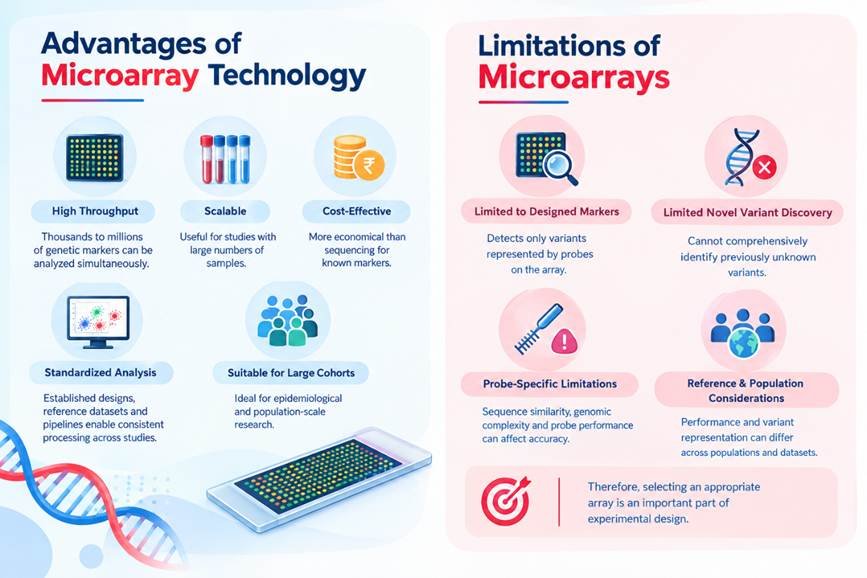
Advantages of Microarray Technology
High Throughput
Thousands to millions of genetic markers can be analyzed simultaneously.
Scalable
Microarray platforms are particularly useful for studies involving large numbers of samples.
Cost-Effective for Defined Genotyping
When the research objective focuses on known genomic markers, arrays can be more economical than sequencing-based approaches.
Standardized Analysis
Established array designs, reference datasets and analysis pipelines can facilitate standardized processing across large studies.
Suitable for Large Cohorts
The ability to process large numbers of samples makes microarrays valuable for epidemiological and population-scale research.
Limitations of Microarrays
Despite their advantages, microarrays also have limitations.
Limited to Designed Markers
A conventional SNP array primarily detects variants represented by probes on the array.
Limited Novel Variant Discovery
Unlike sequencing, microarrays generally cannot comprehensively identify previously unknown variants.
Probe-Specific Limitations
Sequence similarity, genomic complexity and probe performance can affect genotyping accuracy.
Reference and Population Considerations
Array performance and variant representation can differ across populations depending on the array design and reference datasets used.
Therefore, selecting an appropriate array is an important part of experimental design.
Conclusion
Microarray technology remains an important platform for high-throughput genomic analysis. From SNP genotyping and GWAS to population genetics, pharmacogenomics and biobank studies, microarrays enable researchers to investigate large numbers of genetic markers efficiently. The choice between microarray, targeted sequencing, WES or WGS ultimately depends on the research question and the level of genomic information required. For large-scale studies involving predefined genetic markers, microarray-based genotyping can provide a practical combination of high throughput, scalability and cost efficiency.