

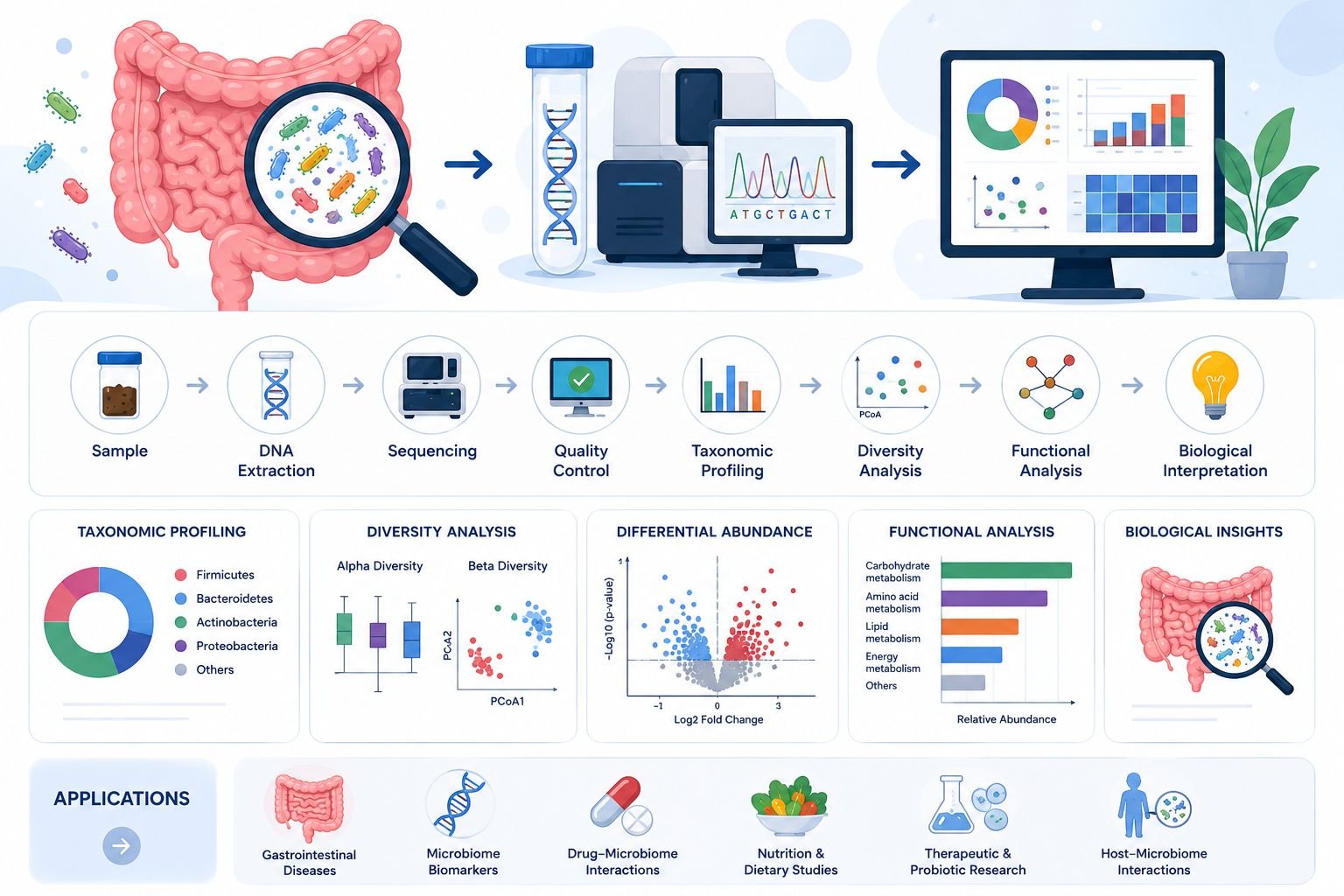
The gut microbiome contains trillions of microorganisms that influence digestion, immunity, metabolism, and overall health. With 16S rRNA sequencing and shotgun metagenomics, researchers can characterize microbial communities and investigate their functional potential.
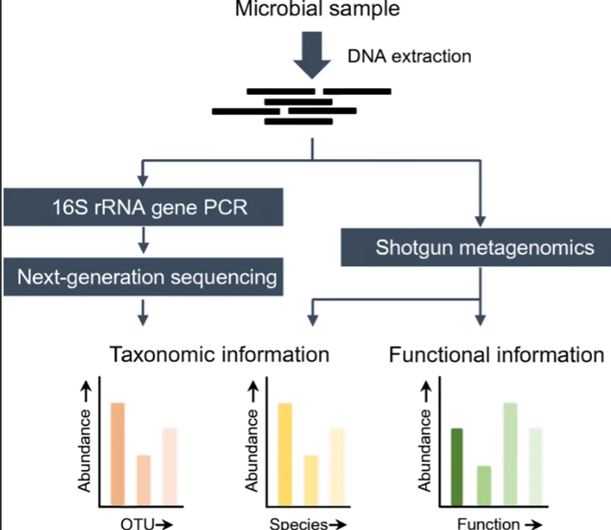
What Is Gut Microbiome Data Analysis?
Gut microbiome data analysis is the computational process of converting sequencing data into meaningful information about microbial composition, diversity, abundance, and function.
A typical workflow includes:
Sample → DNA Extraction → Sequencing → Quality Control → Taxonomic Profiling → Diversity Analysis → Functional Analysis → Biological Interpretation
Key Steps in Gut Microbiome Analysis
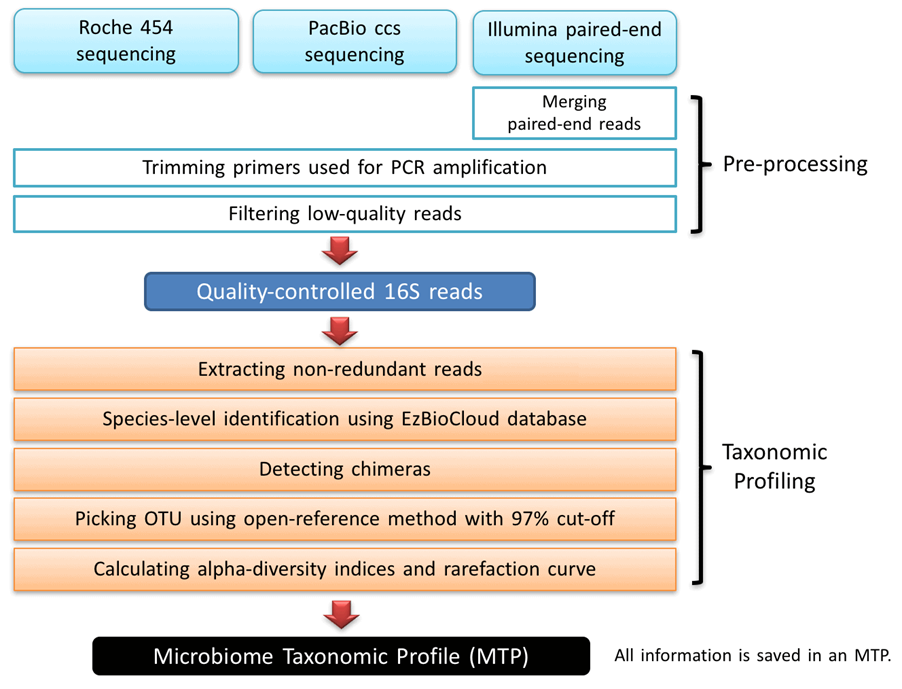
1. Quality Control
Raw sequencing reads are checked for quality, adapter contamination, and sequencing errors before downstream analysis.
2. Taxonomic Profiling
Microorganisms are identified and classified at different levels, including phylum, family, genus, and species.
3. Diversity Analysis
Researchers evaluate:
- Alpha diversity – diversity within individual samples
- Beta diversity – differences between microbial communities
4. Differential Abundance
Statistical analysis identifies microorganisms that are significantly enriched or depleted between experimental groups, such as healthy vs. disease-associated microbiomes.
5. Functional Analysis
Shotgun metagenomics can provide insights into microbial genes, metabolic pathways, and functional capabilities, helping researchers understand what the microbiome may be doing.
Applications
Gut microbiome data analysis can support research in:
🦠 Gastrointestinal diseases
🧬 Microbiome biomarkers
💊 Drug–microbiome interactions
🥗 Nutrition and dietary studies
🧪 Therapeutic and probiotic research
🔬 Host–microbiome interactions
Conclusion
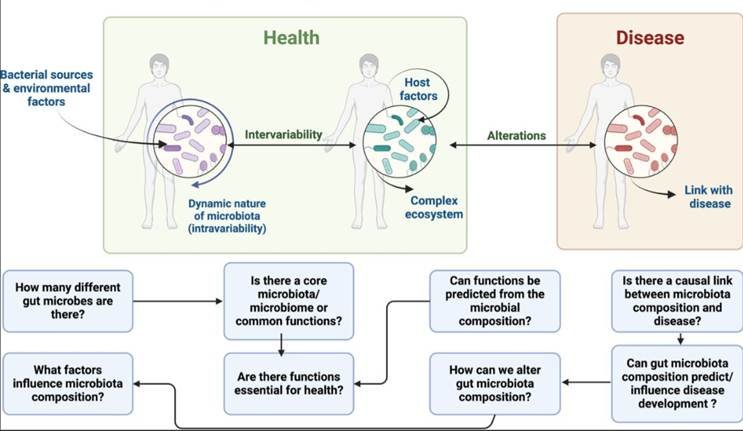
Effective gut microbiome data analysis transforms sequencing reads into actionable biological insights. Combining taxonomic, diversity, differential abundance, and functional analyses enable researchers to better understand how microbial communities relate to health, disease, and treatment response.
Looking for Gut Microbiome Data Analysis?
CellSeq Solutions provides genomics and bioinformatics support for microbiome research, from sequencing data processing to downstream biological interpretation.