

Introduction
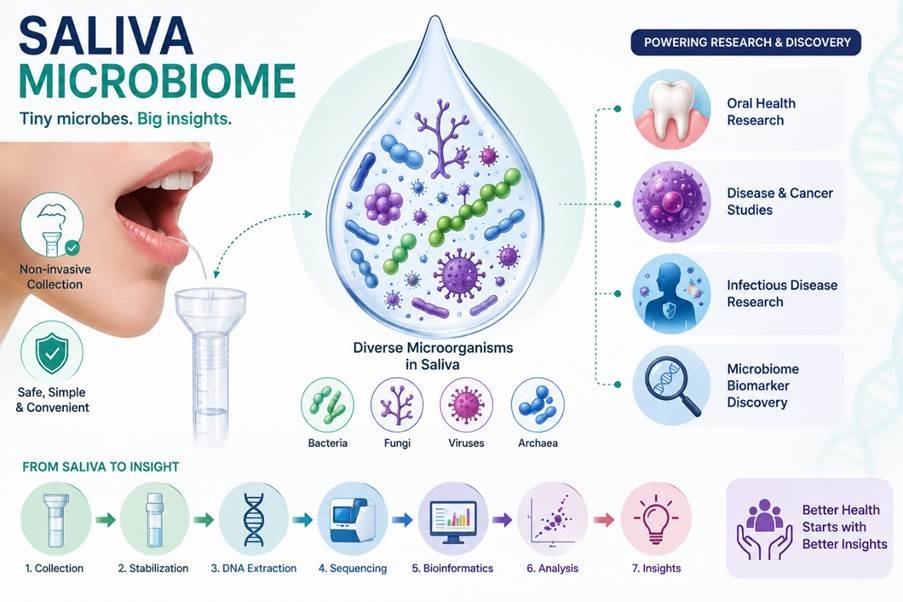
The saliva microbiome consists of diverse microorganisms present in saliva, including bacteria, fungi, viruses, and archaea. Because saliva is easy to collect and non-invasive, it is increasingly used in oral microbiome research, disease studies, and microbiome biomarker discovery.
Why Use Saliva for Microbiome Analysis?
Saliva offers several advantages:
- 🧬 non-invasive and easy collection
- 🧪 Suitable for large-scale studies
- 📦 Convenient sample transportation and storage
- 🔬 Contains microbial DNA for sequencing
- 📊 Useful for longitudinal and population studies
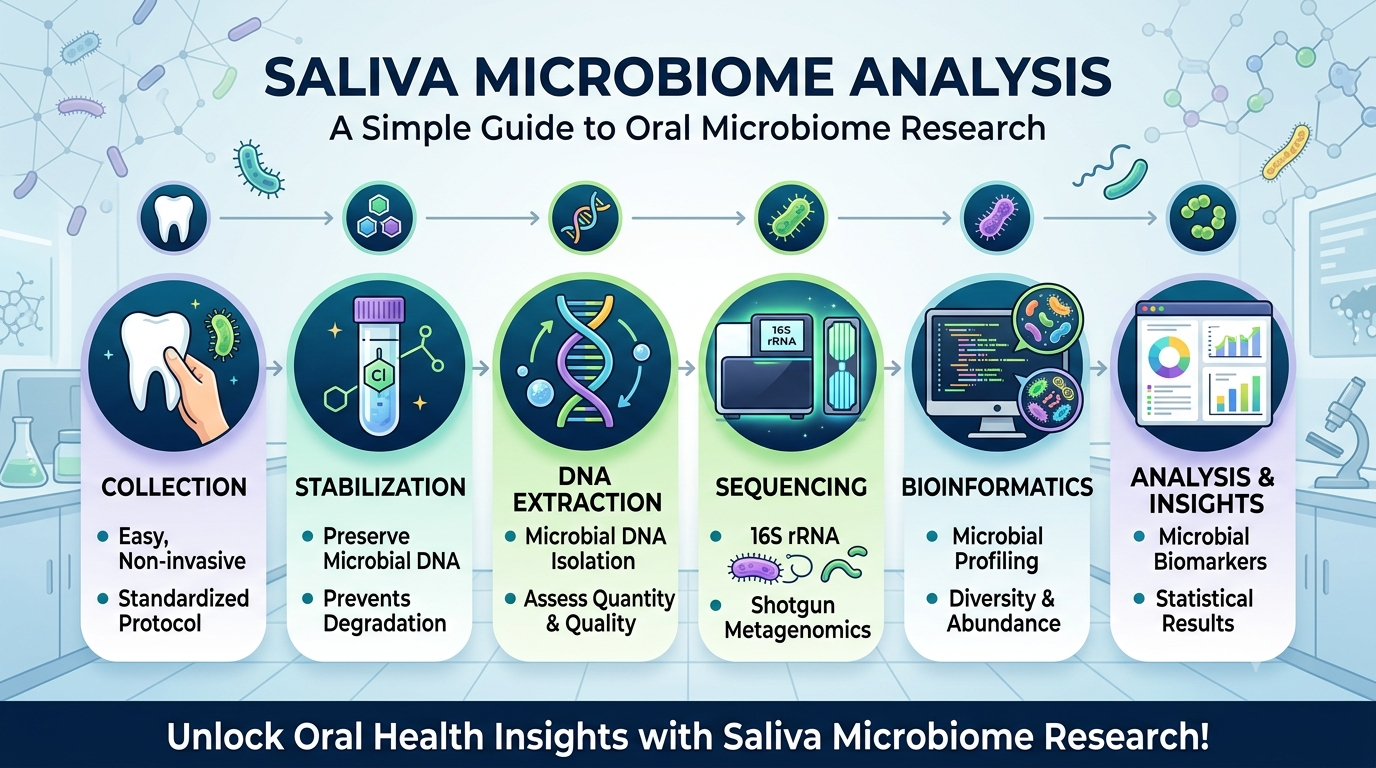
Saliva Microbiome Analysis Workflow
Saliva Collection → Stabilization → DNA Extraction → Sequencing → Bioinformatics → Microbial Profiling → Statistical Analysis → Biological Interpretation
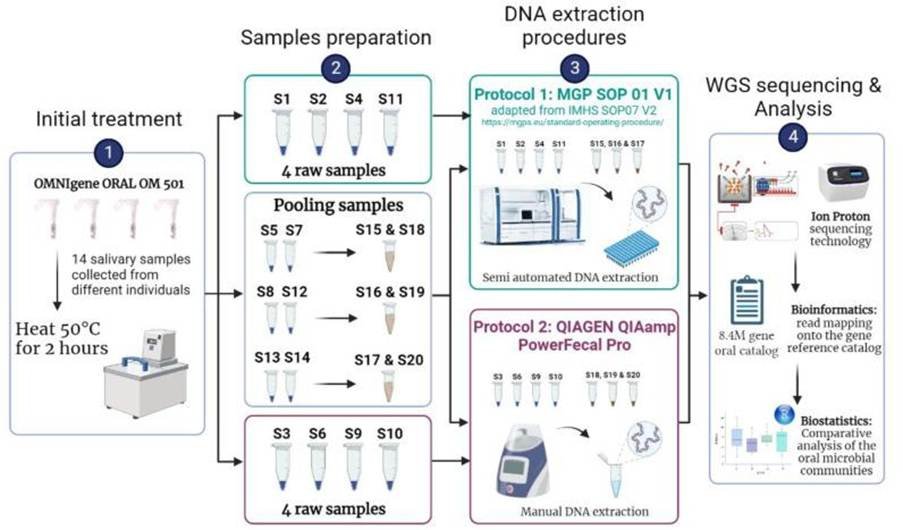
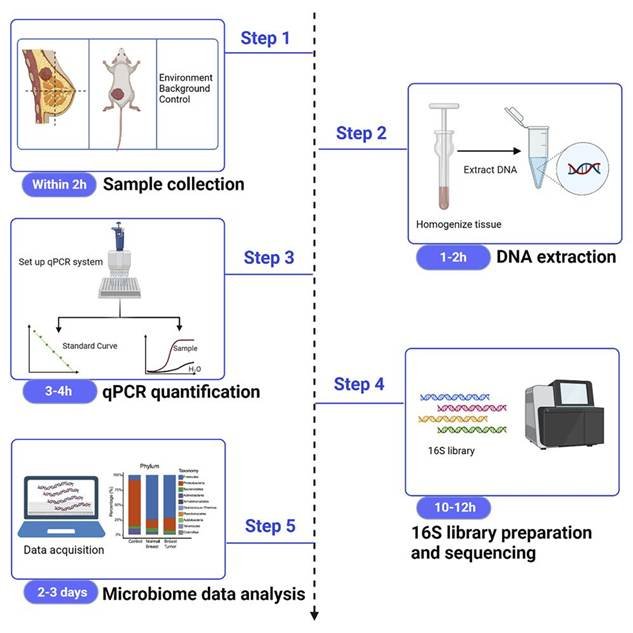
1. Sample Collection
Standardized saliva collection is essential. Factors such as diet, oral hygiene, smoking, medications, and collection timing can influence microbiome composition.
2. DNA Extraction
Microbial DNA is extracted from saliva and assessed for quantity, purity, and quality before sequencing.
3. Sequencing
Researchers can choose between:
16S rRNA sequencing – commonly used for bacterial community profiling.
Shotgun metagenomics – provides broader taxonomic information and enables functional profiling.
4. Bioinformatics Analysis
Sequencing data can be analyzed for:
- Microbial composition
- Alpha and beta diversity
- Differential abundance
- Functional pathways
- Potential microbial biomarkers
Applications
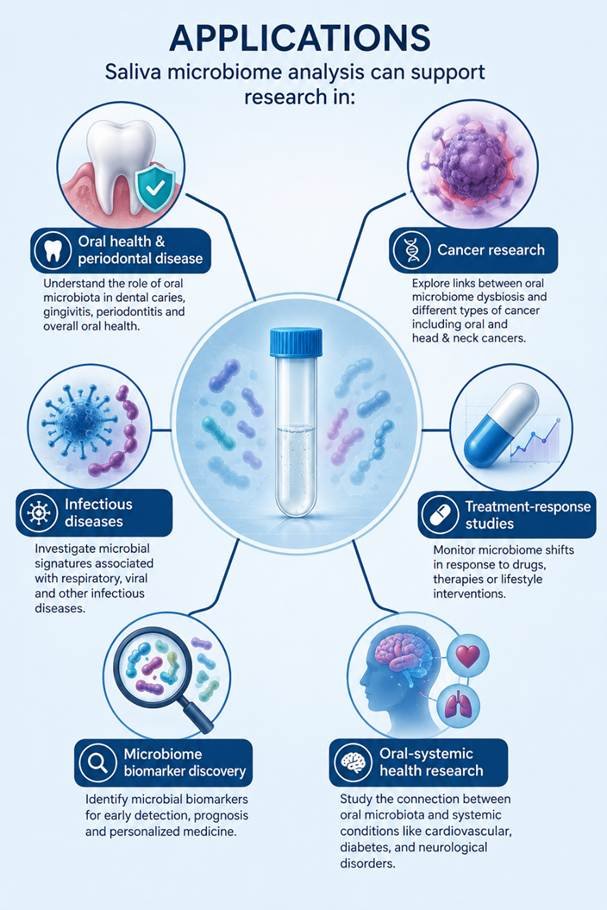
Saliva microbiome analysis can support research in:
🦷 Oral health & periodontal disease
🧬 Cancer research
🦠 Infectious diseases
💊 Treatment-response studies
🔎 Microbiome biomarker discovery
🧠 Oral-systemic health research
Key Considerations
Reliable results depend on consistent sample collection, proper stabilization and storage, contamination controls, standardized DNA extraction, appropriate sequencing depth, and robust bioinformatics analysis.
Conclusion
Saliva microbiome analysis provides a convenient approach for studying oral microbial communities. Choosing the right sequencing method—16S rRNA or shotgun metagenomics—depends on the research question, required resolution, and desired biological insights.
Planning an oral microbiome study? CellSeq Solutions LLP can support your workflow from sample processing and sequencing to microbial profiling and data analysis.