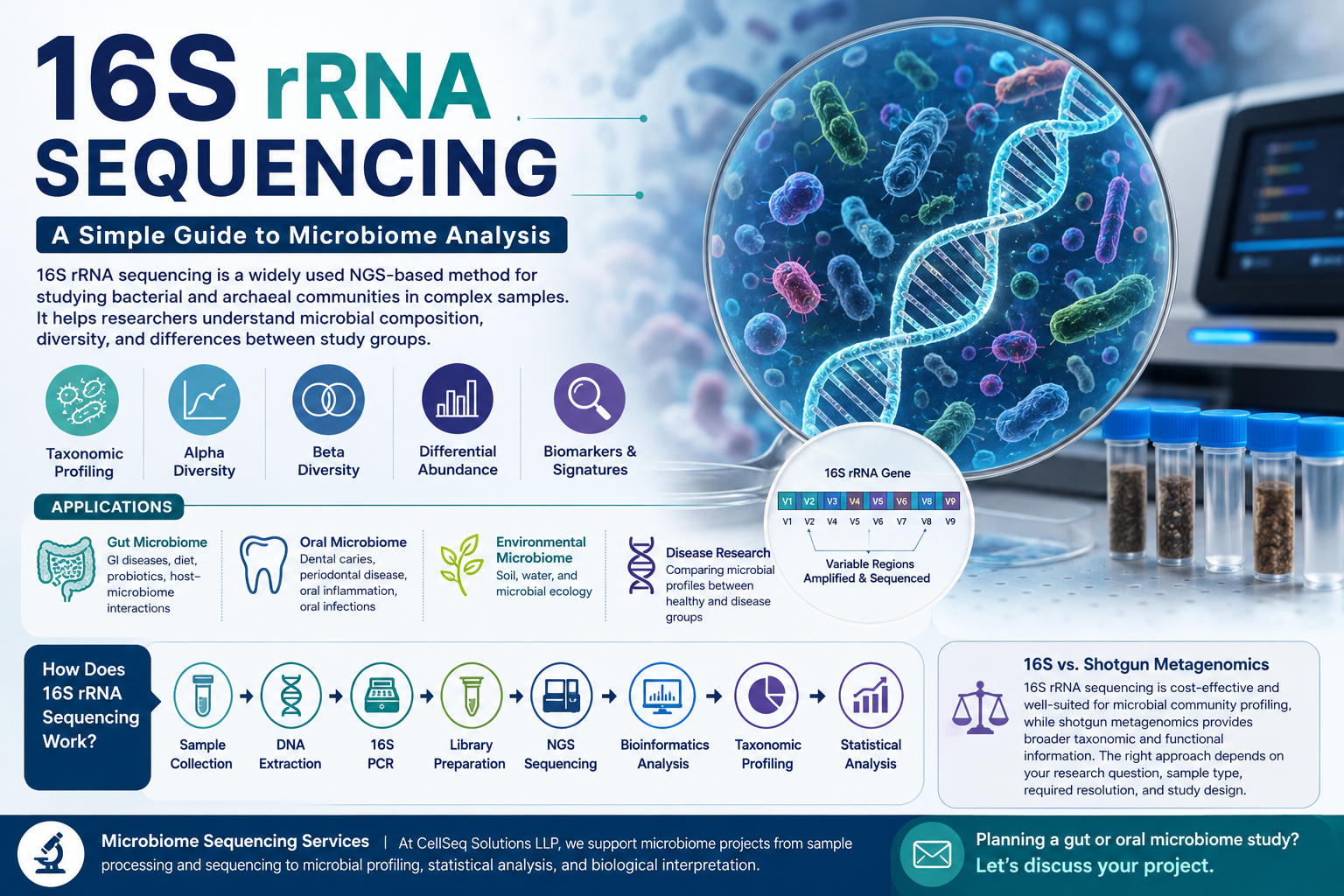

16S rRNA sequencing is a widely used NGS-based method for studying bacterial and archaeal communities in complex samples. It helps researchers understand microbial composition, diversity, and differences between study groups.
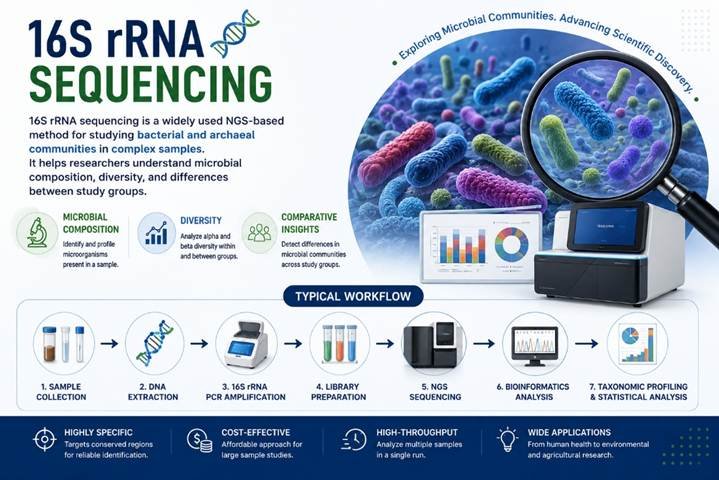
How Does 16S rRNA Sequencing Work?
A typical workflow is:
Sample Collection → DNA Extraction → 16S PCR → Library Preparation → NGS Sequencing → Bioinformatics → Taxonomic Profiling → Statistical Analysis
Specific variable regions of the 16S rRNA gene are amplified and sequenced. The resulting reads are processed to identify microbial taxa and compare microbial communities.
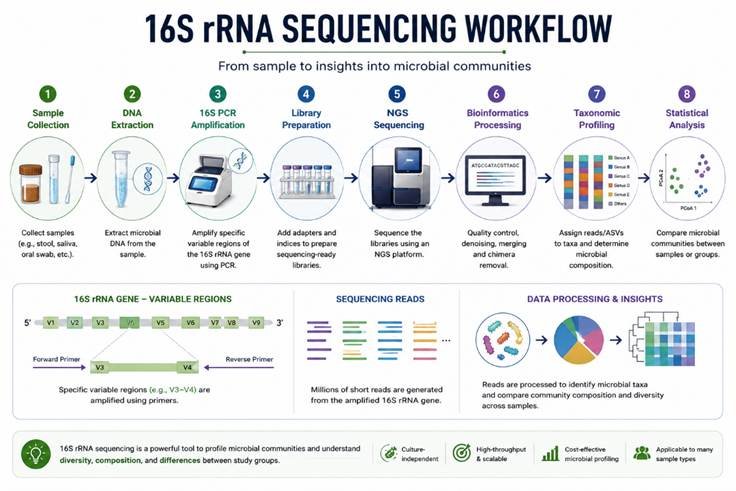
What Can It Analyze?
16S sequencing can provide:
- Taxonomic profiling of bacterial and archaeal communities
- Alpha diversity within samples
- Beta diversity between groups
- Differential abundance of microbial taxa
- Potential microbial signatures and biomarkers
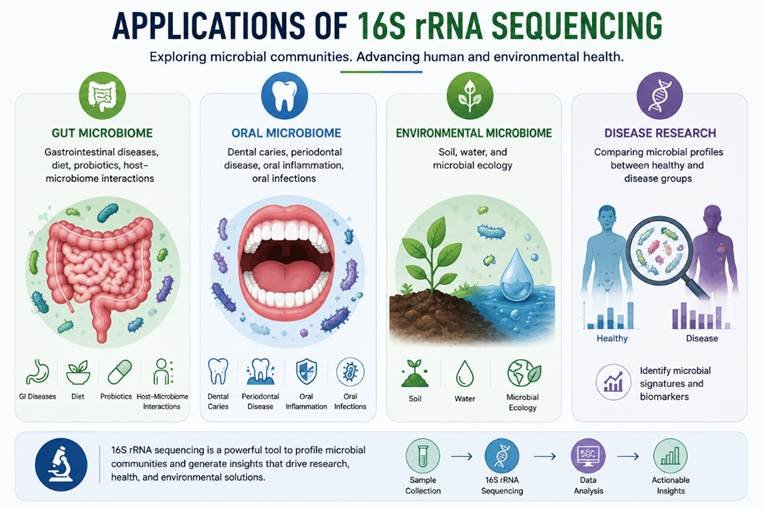
Applications
16S rRNA sequencing is commonly used in:
🦠 Gut Microbiome – gastrointestinal diseases, diet, probiotics, host–microbiome interactions
🦷 Oral Microbiome – dental caries, periodontal disease, oral inflammation, oral infections
🌱 Environmental Microbiome – soil, water, and microbial ecology
🧬 Disease Research – comparing microbial profiles between healthy and disease groups
16S vs Shotgun Metagenomics
16S rRNA sequencing is generally cost-effective and well suited for microbial community profiling, while shotgun metagenomics provides broader taxonomic and functional information.
The right approach depends on your research question, sample type, required resolution, and study design.
Microbiome Sequencing Services
At CellSeq Solutions LLP, we support microbiome projects from sample processing and sequencing to microbial profiling, statistical analysis, and biological interpretation.
📩 Planning a gut or oral microbiome study? Let's discuss your project.
SEO Keywords: 16S rRNA sequencing, 16S sequencing, microbiome sequencing, gut microbiome, oral microbiome, microbiome analysis, NGS sequencing