
Introduction
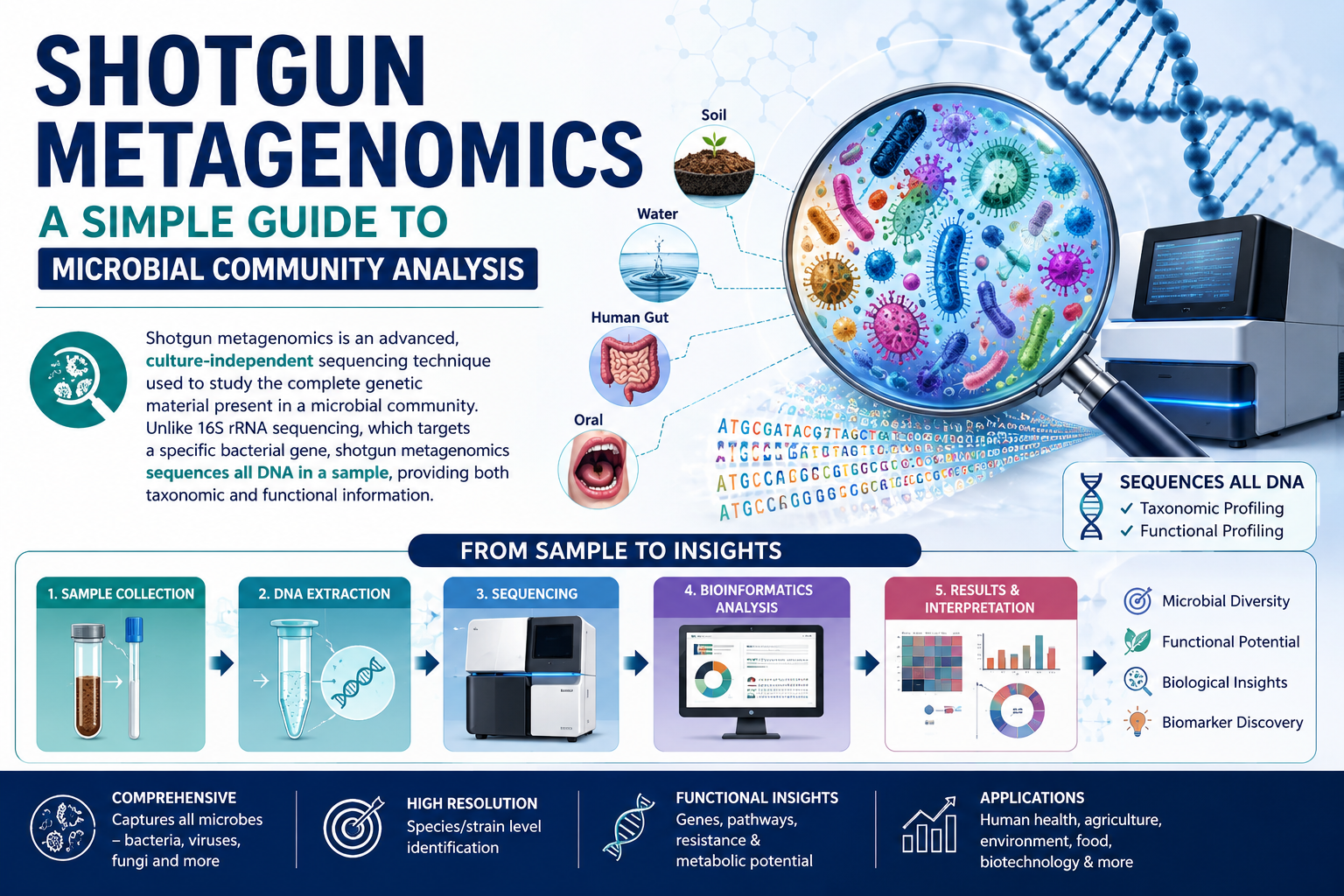
Shotgun metagenomics is an advanced, culture-independent sequencing technique used to study the complete genetic material present in a microbial community. Unlike 16S rRNA sequencing, which targets a specific bacterial gene, shotgun metagenomics sequences all DNA in a sample, providing both taxonomic and functional information.
How Does Shotgun Metagenomics Work?
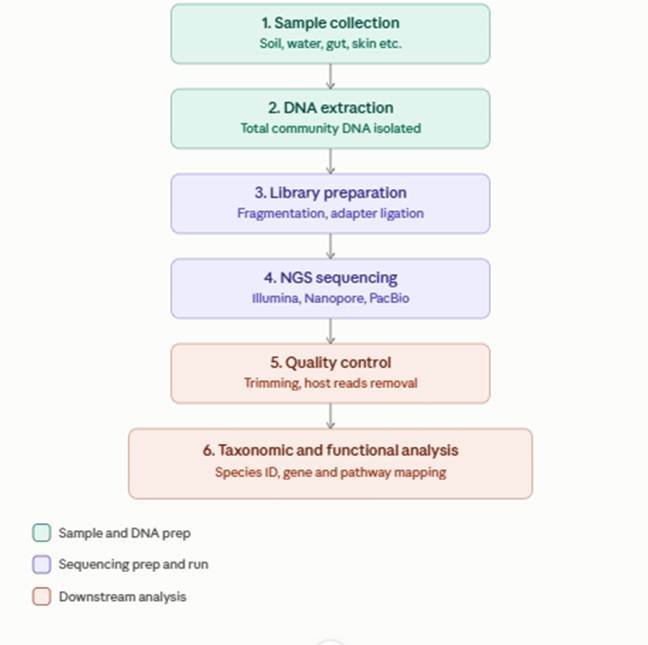
The basic workflow includes:
Sample Collection → DNA Extraction → Library Preparation → NGS Sequencing → Quality Control → Taxonomic & Functional Analysis
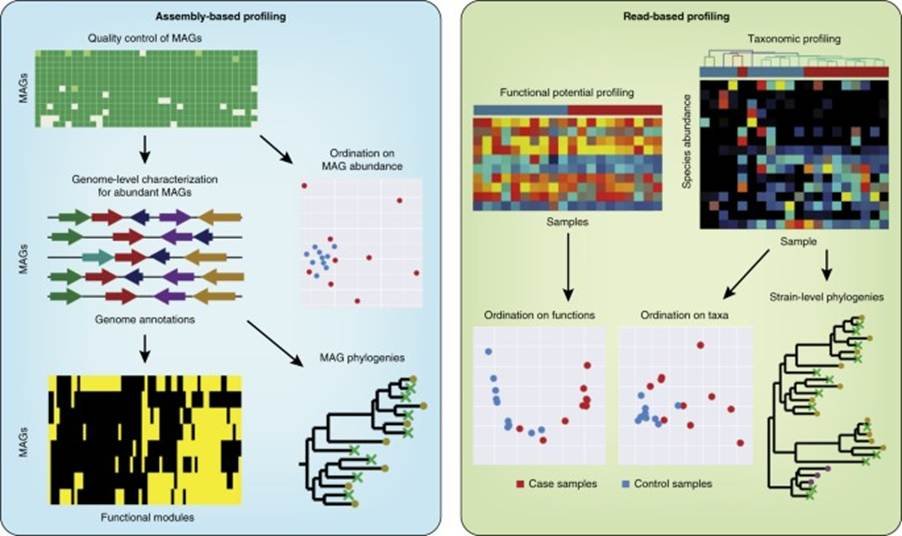
DNA from the entire microbial community is extracted and randomly fragmented before sequencing. Bioinformatics tools are then used to identify microorganisms, genes, and metabolic pathways.
What Can It Reveal?
Shotgun metagenomics can provide information about:
- 🦠 Microbial composition – bacteria, archaea, fungi, and viruses
- 🧬 Functional genes – metabolic and biological pathways
- 💊 Antibiotic resistance genes
- ⚠️ Virulence-associated genes
- 🔬 Metagenome-assembled genomes (MAGs)
- 🌱 Microbial interactions and ecosystem functions
Shotgun Metagenomics vs 16S Sequencing
| Feature | 16S Sequencing | Shotgun Metagenomics |
| Target | 16S rRNA gene | Total DNA |
| Main output | Taxonomic profile | Taxonomy + function |
| Resolution | Usually genus-level | Often species/strain-level |
| Functional analysis | Limited | Extensive |
| Cost & computation | Lower | Higher |
Applications
Shotgun metagenomics is widely used in human microbiome research, infectious disease studies, environmental microbiology, agriculture, and food microbiology.
It is particularly useful when researchers want to understand not only “who is there?” but also “what can they do?”
Conclusion
Shotgun metagenomics provides a comprehensive view of microbial communities by combining taxonomic profiling with functional analysis. With advances in NGS, long-read sequencing, and bioinformatics, it is becoming an increasingly valuable tool for microbiome research and biomarker discovery.